Put Your Family History in Writing

“Stories have to be told or they die, and when they die, we can’t remember who we are or why we’re here.”
— Sue Monk Kidd, The Secret Life of Bees

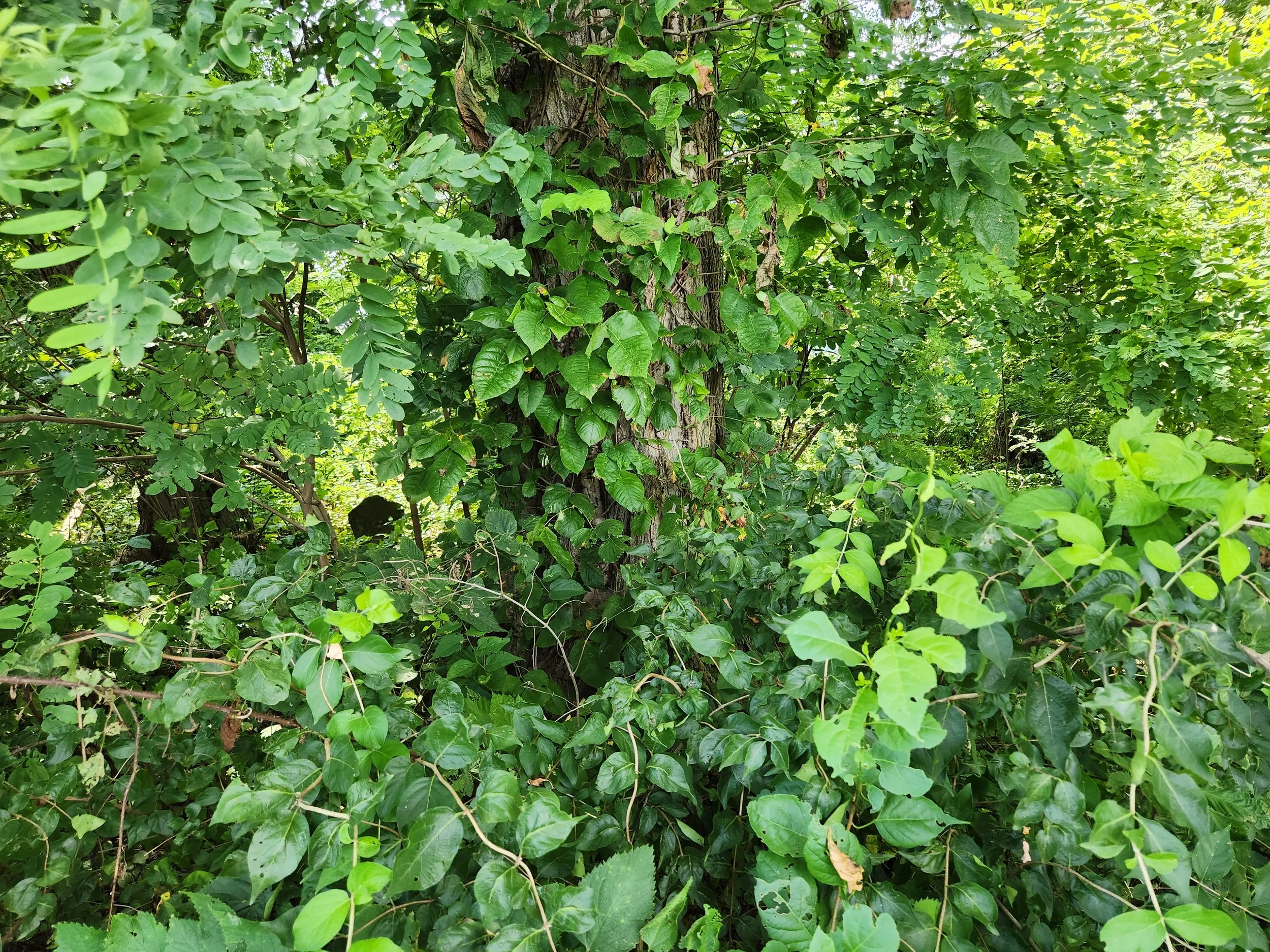
One gravestone, silhouetted in the sunlight between two trees, invites us into the Denlinger Cemetery

In 1999, my maternal grandfather’s brother, Granduncle Paul Ahlers, wrote a family history that provided details about something my cousins and I heard many times while we were growing up—that we are part “Pennsylvania Dutch.” In his book, Paul includes a copy of “The Denlinger Family,” a well-researched and well-documented article written by distant cousin Ralph E. Denlinger that appeared in Pennsylvania Mennonite Heritage magazine in July 1980. In it, Ralph tells the story of our common ancestor Michael Denlinger, who left with his family from Ibersheim, Germany in about 1715 and came to East Lampeter Township, Lancaster County, Pennsylvania to begin farming on Pequea Creek.

The Denlingers were Mennonites, a branch of the Anabaptist movement originating in Switzerland in 1525. Persecuted for their beliefs by religious and political authorities, Mennonites left Switzerland for other parts of Europe, including the Palatinate region of southwest Germany. Then, according to Encyclopedia Britannica, “Beginning in 1663, Mennonites emigrated to North America to preserve the faith of their fathers, to seek economic opportunity and adventure, and especially to escape European militarism.”[1] The Denlinger family’s arrival in Pennsylvania in 1715 marked the beginning of a four-decades-long “Great Migration” of Palatine Germans to the state.

In his article, Ralph identifies the land on which the Denlinger family settled, including the names of the present-day roads that run through and around it. He also references the Denlinger Cemetery, which was located on the homestead. According to a footnote in the article, “Michael and his wife, Frances, are believed to be resting here in unmarked graves. Their two sons and several other descendants are buried here. The oldest dated stone in the cemetery is 1776.”[2]

According to Ralph, the first three generations of my ancestors stayed in the East Lampeter Township region. A member of the fourth generation, my 4x great-grandfather, moved west to Blair County, Pennsylvania, and several members of the fifth generation “traveled” or moved to Iowa in the 1850s. Ralph’s account matches Paul’s account (and my subsequent research) of the origin of my 3x great-grandfather Christian Denlinger, who came from Pennsylvania to Iowa in 1854, as did two of his brothers around the same time.
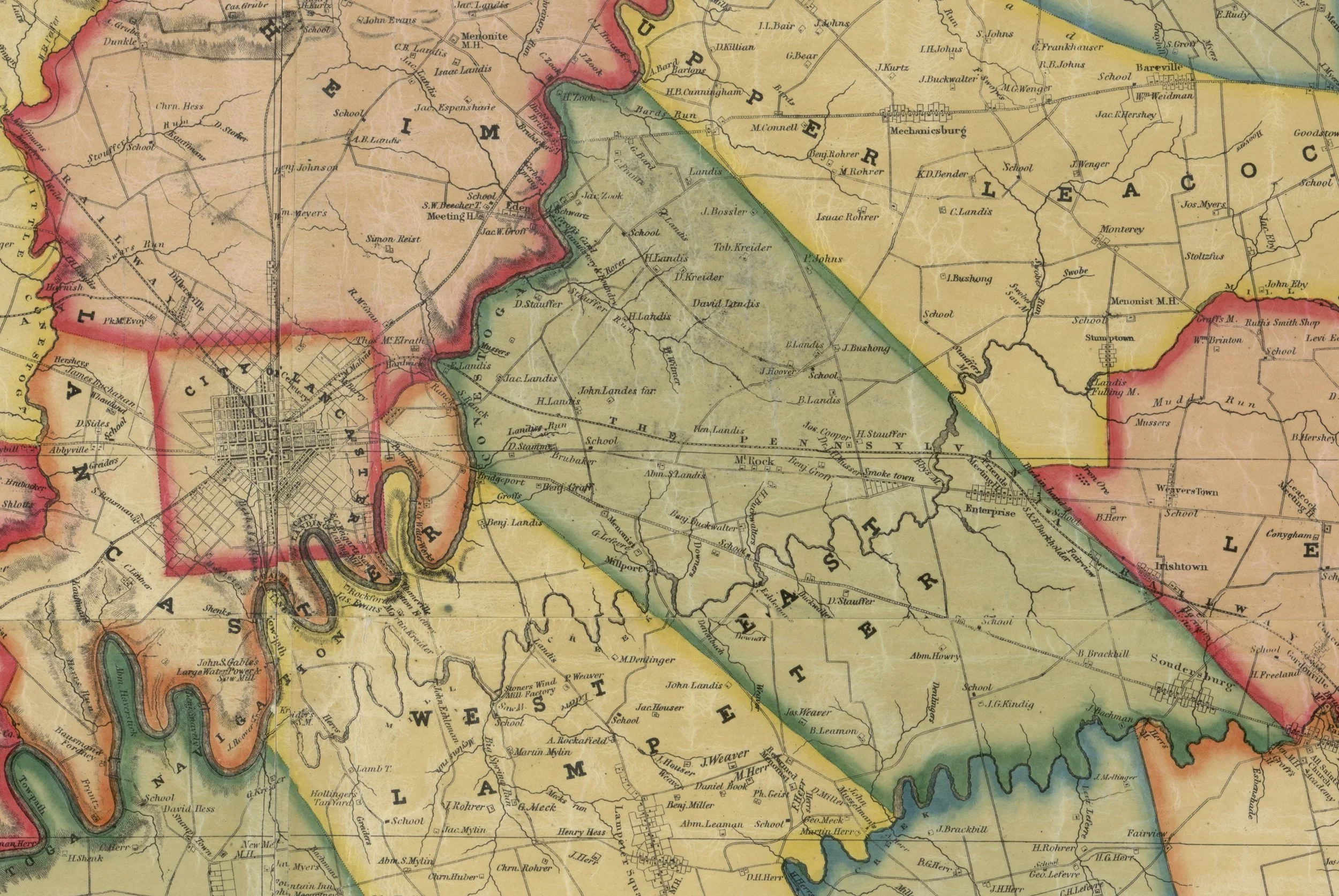
East Lampeter Township in an 1851 map of Lancaster County, Pennsylvania

Born in Iowa and never having been to East Lampeter Township, I was eager to explore it. For years I pored over old maps and compared them to current satellite images on Google Maps. I dreamed about driving the roads and seeing the land today. I especially wanted to visit the Denlinger Cemetery. Finally in 2025, the 500th anniversary of Anabaptism and the year of my 60th birthday, I knew it was time! And so my wife and I began to plan a trip.

To prepare, I read Real People: Amish and Mennonites in Lancaster County, Pennsylvania by A. Martha Denlinger. Martha, a member of the Mennonite church, originally wrote the book in 1975 after years of working at the Mennonite Information Center in Lancaster. In it she answers many of the questions that tourists commonly asked her. I researched her background to figure out how she and I are related, and I hoped to meet her. Sadly, she died in 2024, and I would never get the chance.

I also researched the Denlinger Cemetery, which I intended to make the focal point of our trip, and was helped by an information page posted on the Find A Grave website. It alerted me to several facts:

  • This cemetery is on private property. Before going out to it, stop at the property owner’s house and request permission.

  • There is no public road access, you have to walk about 120 yards along the edge of the field to a stand of trees in the northeast corner of the property.

  • Many of the stones are worn/broken.[3]

The website also included a hand-drawn map of the cemetery made by Ralph Denlinger, featuring the location of stones and the list of names and dates carved into them.

We were ready to go!
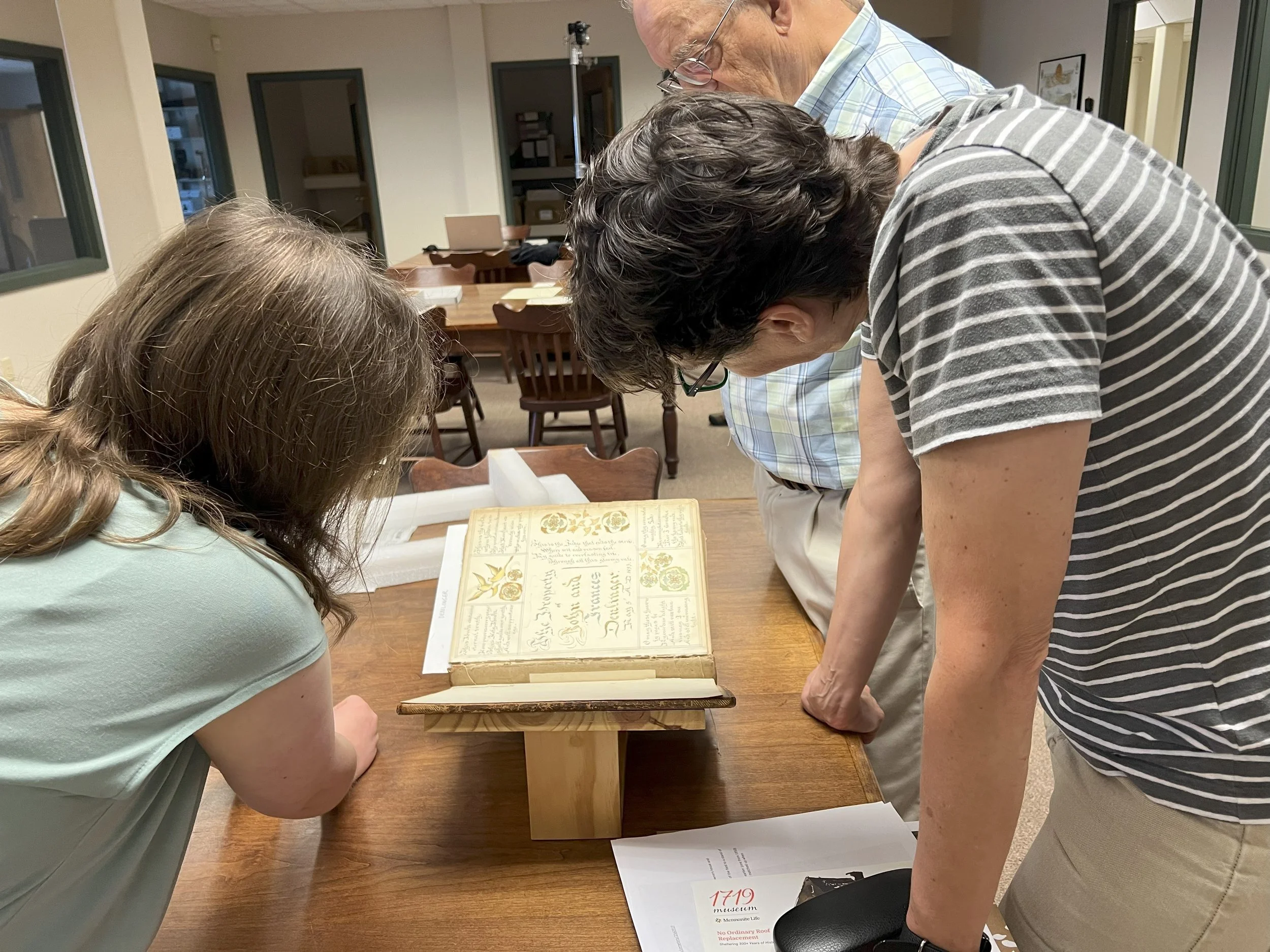
The John and Frances Denlinger family Bible at the Mennonite Life Archives and Library in Lancaster

I cannot describe how transformative it was to immerse ourselves in that area for just a couple of days. Everywhere there were lush, green farms with fields of tall corn, yards with lines of clothing drying in the sun, and farmstands loaded with everything from tomatoes to honey. From Martha I had learned, “The Amish today and their less conservative neighbors, the Mennonites, often live and work together in the community. But they worship separately.”[4] The Amish farms had carriages parked in their driveways; the Mennonite farms, pickup trucks.

In the restaurants and shops we visited, Amish and Mennonite workers very kindly and peacefully attended their customers, despite the hot temperatures, crowds, and amusement-park vibe of nearby attractions. If we were lucky, we occasionally caught snippets of their conversation among themselves, spoken in Pennsylvania Dutch, a language related to German that has been kept alive since the late 18th century.

We first made our way to the Mennonite Life Archives and Library, where the staff generously pulled a Denlinger family Bible from the shelves and set it on a table for us to view. John Denlinger, who “was born the 5th of January in the year of our Lord 1827, Constellation the Aquarius,” as the Marriages page states, was not an ancestor of mine, but he was a distant cousin. Calligraphy on the title page claimed the Bible as “The Property of John and Frances Denlinger” and was surrounded by colorful illuminations of birds and flowers. Being in the presence of this book connected me directly with these people and this place across centuries, like a hand extended for me to hold for a moment and express my gratitude.
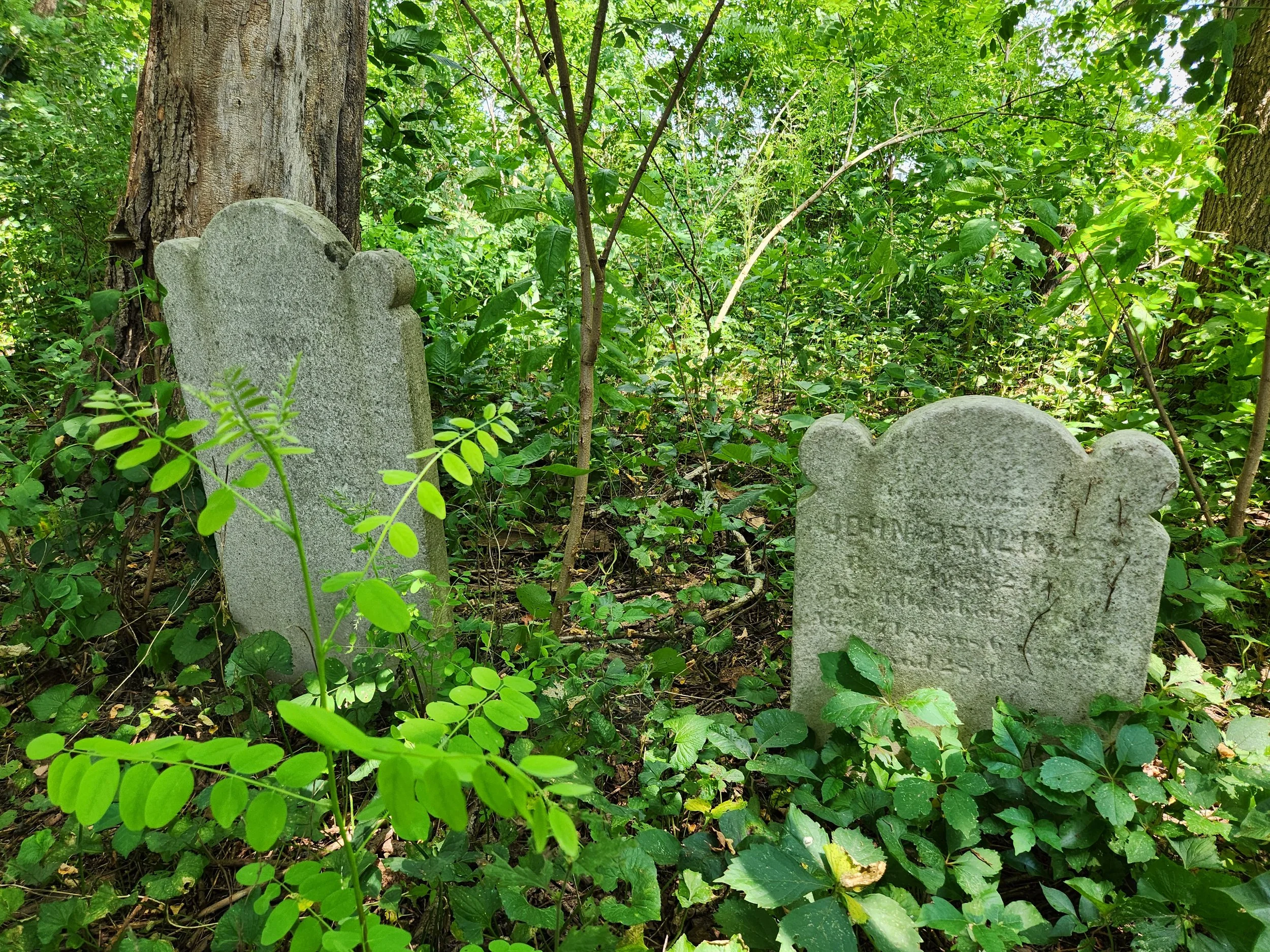
The gravestones of John and Anna Denlinger in the Denlinger Cemetery

And then it was off to the cemetery. We knocked on the door of one farmhouse but found no one home, so left a note of explanation under the windshield wiper of our car and ventured onto a path at the edge of their cornfield. But soon we hit the edge of another cornfield and had to turn around. Driving to a road on the opposite side of the cemetery, we drove up the driveway of another house and found the owner at home. She pointed us to a patch of woods at the end of her lot but said that we might have trouble finding our way because an older man used to take care of the cemetery but hadn’t done so for years. Walking along the edge of another cornfield, we came to a tiny grove of trees, overgrown with shrubs and vines, and with no obvious entryway. Then my wife spotted a gravestone and headed toward it, shouting out to me that there were several more, everywhere! We climbed around in the sweltering heat for about a half an hour, finding one stone after another, and reading their inscriptions. Again, we found no evidence of my direct ancestors, but we knew we were walking on the family’s hallowed ground, and we were so deeply moved. A pilgrimage completed at last.

To others the Denlinger Cemetery may be just a jumbled mix of broken and still-standing gravestones hidden in a tangle of trees and weeds at the far intersection of four cornfields in rural Pennsylvania, but this place felt sacred to me. And as we stood there, I couldn’t help but think: I wouldn’t have known about any of this if someone hadn’t written it down.

Dear descendants of Michael and Frances Denlinger, thank you for carving names and dates on these stones!

Dear John and Frances Denlinger, thank you for keeping a family Bible!

Dear Ralph Denlinger, thank you for writing your magazine article!

Dear Martha Denlinger, thank you for writing your book!

And especially, dear Granduncle Paul Ahlers, thank you for recording our family history in the first place, the original piece that led me on this journey!

I hope that this reflection inspires every reader to begin recording their genealogy. It must be written down, or it will be lost. It is as simple as that. Some people don’t begin writing because they feel like they haven’t completed their research yet. Let me tell you, it will never be done! Start it now, share what you know already. Give others a foothold to take steps from there. Write it down! Write it down! Write it down!


[1] “Mennonite,” Encyclopædia Britannica (https://www.britannica.com)

[2] Ralph E. Denlinger, “The Denlinger Family,” Pennsylvania Mennonite Heritage, Vol. 3, No. 3 (July 1980), p. 12

[3] “Denlinger Cemetery, East Lampeter Township, Lancaster County, Pennsylvania, USA,” Find A Grave (https://www.findagrave.com)

[4] A. Martha Denlinger, Real People: Amish and Mennonites in Lancaster County, Pennsylvania (Scottdale, Pennsylvania: Herald Press, 1993), p. 14


Liz Sonnenberg is staff genealogist for Modern Memoirs, Inc.
Reflections from Jay K. Musoff

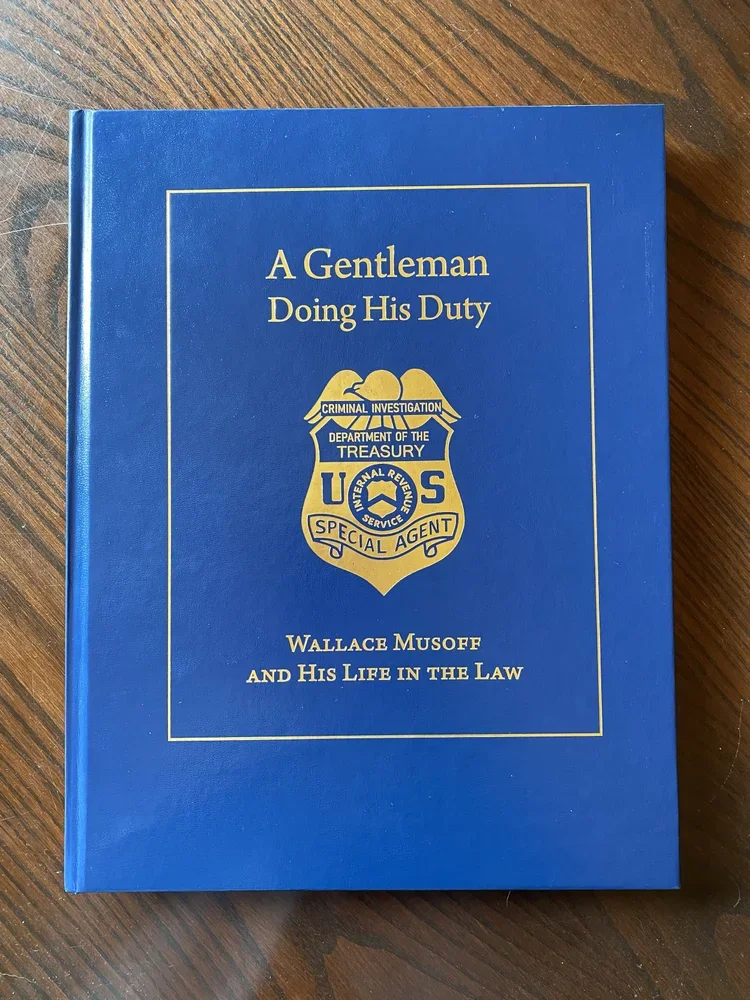
Jay K. Musoff, son of Wallace Musoff, collaborated with his brothers, Scott D. and Adam L. Musoff, to publish A Gentleman Doing His Duty: Wallace Musoff and His Life in the Law with Modern Memoirs in 2020. This collection of the court records of legal cases tried by their father took three and a half months from the day we started it until books arrived on their doorsteps. Modern Memoirs President Megan St. Marie reflected on the project shortly after its completion in 2020 in a blog entitled “On the Important Things in Life.” We recently caught up with Jay Musoff to ask what the publication process was like for him, and what it has meant to share his father’s book with others.


1. You created this book as a gift to your father to mark his 90th birthday. It spans his legal career with the U.S. Treasury Department in the 1950s and 1960s, and private practice from the 1970s to the 1990s. What inspired you to create a custom hardcover book of his court records, including family photos, news articles, and a collaborative introduction and epilogue by you and your brothers, as opposed to producing a standard volume of law reports?

Jay Musoff: Our father had a prominent and colorful legal career—involving some notable and notorious figures. Dad always had great stories about his cases, and we wanted to collect those cases, along with some memorable stories, in one place that could be shared with his family, particularly his grandchildren.

2. What was your father’s reaction when you presented him with the book?

Jay Musoff: Dad’s 90th birthday was in April 2020, and Mom had planned a big birthday celebration. COVID-19 ruined those plans. Instead, we had to celebrate Dad’s 90th birthday by Zoom. We had shipped the book to my parents’ house, and we had Dad open the box during the Zoom celebration. Dad was literally speechless. He said that the book was “breathtaking” and the best present he ever received.


“Each year since my dad has been gone, I reread the book on his birthday.”

3. What feedback have you gotten from other family members?


Jay Musoff: Dad inscribed copies of the book to all his children and grandchildren, plus some friends who are mentioned in the book. The grandchildren particularly loved some of the stories and the pictures we included in the book of their grandfather “back in the day.”

4. The cover of the book features a custom-designed image of the badge of a special agent with the U.S. Internal Revenue Service. Why did you choose that emblem to represent the whole?

Jay Musoff: Dad was enormously proud of his service to our country, and the special agent badge represented that pride.

5. Your father passed away in 2023, three years after you published his book. What did it mean to you to complete it in time for his milestone birthday in 2020? How have you reflected further on the project since his passing?

Jay Musoff: We could think of no better way to mark Dad’s 90th birthday than this book that both commemorated and celebrated our father. Dad loved the book and kept copies in his office, and on the coffee tables in the living room and den room of his home. Each year since my dad has been gone, I reread the book on his birthday.


Liz Sonnenberg is staff genealogist for Modern Memoirs, Inc.
Reflections from Stanley R. Clemens

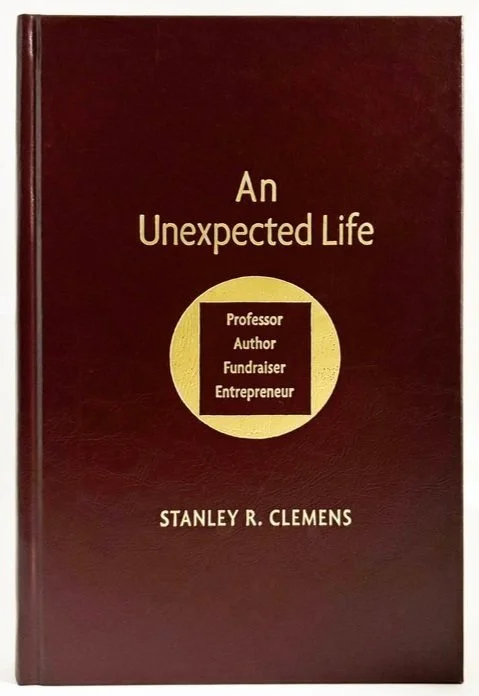
Stanley R. Clemens published his book entitled An Unexpected Life: Professor, Author, Fundraiser, Entrepreneur with Modern Memoirs in 2010. This Commissioned Memoir took 3-1/2 years from the day he first contacted us to the day books arrived on his doorstep. We asked Clemens to reflect on what the publication process was like for him, and what it has meant to share his book with others.


1. Whom did you intend your readers to be, and what were your goals in creating the book for them?

Stanley Clemens: I wrote the book for the benefit of my children and grandchildren and any later descendants who might gain access. Although a relatively small audience, it allowed me to share family stories and personal reflections that I might have been hesitant to include if I had planned to share the publication more broadly.

2. Your project was a Commissioned Memoir, or “as-told-to” narrative, which means that we conducted a series of in-person interviews with you and then created the narrative from the transcripts, maintaining your voice. How did the project benefit from this approach, as opposed to you writing the text yourself?


Here’s a story that suggests I was successful. About 10 years after completing my memoir, one of my sons said […], “I reread your memoir last night, and I’d like to hear more about…”


Stanley Clemens: Prior to writing this memoir I had written numerous books professionally, but they were mathematics textbooks. I feared that my writing style might mask important emotions and decided that an “as-told-to” approach would encourage more open sharing with my family. I describe myself as an introvert, but I think these tendencies were not a problem in the end. Talking to Ali de Groot, the interviewer, was like talking to a close friend. Her genuine interest in hearing my story made the process easy and exciting.

Here’s a story that suggests I was successful. About 10 years after completing my memoir, one of my sons said, “When are you going to take me to visit your boyhood landmarks?” About 10 minutes into the 10-hour drive to see those boyhood sights, my son said, “I reread your memoir last night, and I’d like to hear more about that conflict you had with your high school basketball coach. The way you reacted was so out of character for you.”

3. How would you describe the interview process, what it was like to do your own editing after receiving the initial text, and then have our editors work closely with you to polish and complete it? How did this collaborative approach help to shape the final piece?

Stanley Clemens: I began the writing process by writing an outline for the book. I used this outline as I orally told my story to Ali. The interviews involved about 8 day-long sessions which were recorded. It was a very comfortable process. Ali was supportive and respectful throughout. She helped pull out details from me.

When I received the transcripts back, I took the lead over the next months and did the revising that I felt was needed. I reorganized, rearranged, changed wording, and inserted photographs. It was revision work, not editing work. It became my book. As we got close to the end of the process, Modern Memoirs did what I would call formal editing and helped shape a few of the more difficult spots. Throughout it was a very cooperative process.

4. You said that you “found it very difficult to reach back to childhood, to understand who I was then, and to claim that person as myself.” In the end, what helped you access that period of your life and include it in your story?

Stanley Clemens: I think there was a disconnect between who I became as an adult and who I was as a child. As I think about it now, I would point out that among my parents, grandparents, aunts and uncles, and other adults important in my life as a child, there was no one who was a role model for whom I became as an adult. Once I realized that to be the case, I found the disconnect easier to accept and I found the case for writing my memoir more compelling.

5. What advice would you share with others who are considering working with Modern Memoirs on a Commissioned Memoir?

Stanley Clemens: Go for it. I think you will enjoy the experience. The reason it took several years to complete my memoir was on me, not them. The staff was very professional and helpful.


Liz Sonnenberg is staff genealogist for Modern Memoirs, Inc.
The Last “I Love You”: How Memoir Writing Guides Us Through Grief

A blog post by
Cecelia Allentuck, Publishing Intern


There are no guides to grief. No Grief for Dummies book, no owner’s manual to the bereaved heart. You have to just...feel grief…until it fades to a low simmer in your gut. That feeling can be overwhelming, with grief inside your heart and somehow outside of yourself, too, threatening to devour whatever lies before it. How do you stop it? I wish I had an answer that fit every mold, that could be placed in the hand of every grieving person consumed by their own feelings. But I don’t.

As an 11-year-old, I found my way through grief by walking alongside it, exploring all the caverns of my heart that a loved one left behind, and writing every step of the way. That year, I lost my Uncle John to cancer. I held tight to the hand of my mother, the strongest woman I know, as she lost her brother, who was also one of her best friends. A few months later, while my family and I were still reeling from the loss, my sixth-grade teacher assigned our class a short narrative piece that was supposed to teach us how to show “explosive moments in our writing.”


I find myself turning to writing as soon as I feel grief creeping up on me.


Uncle John’s death was explosive—a shock that left me with a growing feeling that I couldn’t shake away. That feeling was grief. I was so young, using a locker for the first time, switching classrooms every block, smiling at my friends in the hallway. Everything might have seemed normal, on-track, but grief was dancing along the folds of my brain, beating in the blood from my heart, and weighing my shoulders down to a sag.

I decided to write about it.

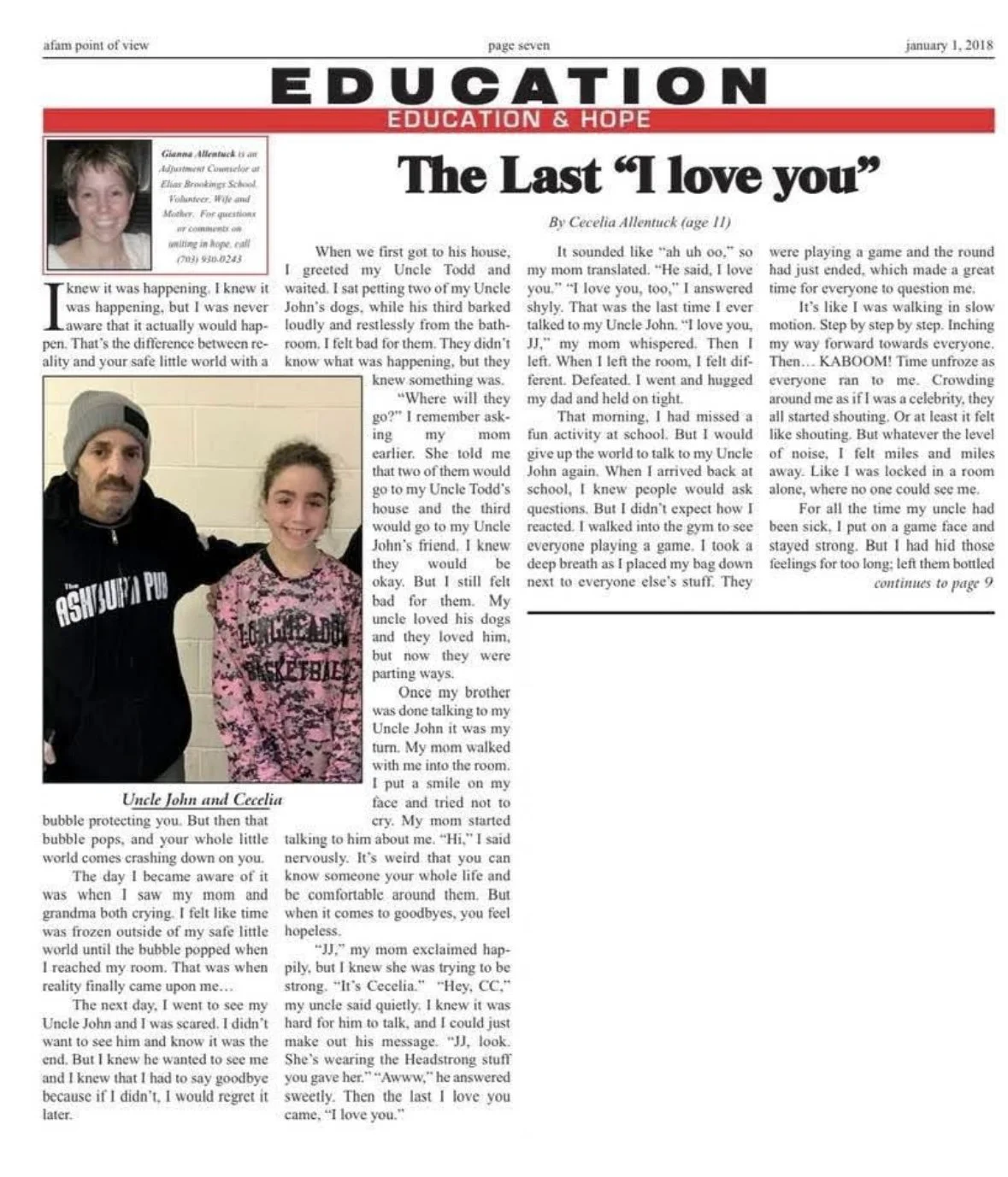
The writing was a short memoir-like piece, titled, “The Last I Love You.” In it I described the day I visited Uncle John to say my final goodbyes. I wrote about the anxiety of anticipation, waiting for an end I never wanted to arrive, and how strange it felt to both know something bad was about to happen and still be unprepared for it. I wrote about the love I had for his dogs, and my worries for their future without him. Uncle John was a person I’d known my whole life, and then he was gone, the stranger that was grief entering in his place. I wrote about the discomfort I felt at his loss, wearing grief like wet jeans, itchy and tight and heavy, as I navigated the unfamiliarity of the world without him. I wrote about how the last “I Love You” I spoke, even though faintly, even if it went unheard, had helped carry me through the months after his death. And as I wrote, my bottled-up grief came pouring out all at once.

I read my piece out loud in front of my class, something I am not sure I could do today, sharing my feelings with old friends, new friends, and students I wouldn’t interact with after that year. With shaky hands but a loud voice, that experience taught me that writing is a superpower, giving us courage and strength by putting words to feelings and making them less overwhelming.

When I wrote this assignment, I never expected that doing so would change how I work through my emotions. Although writing cannot fill the space left by the loss of a loved one, I discovered that it allows me to sift through the messy feelings, extract the good and bad, and create beauty from pain. Years later, I find myself turning to writing as soon as I feel grief creeping up on me. Not only does writing hold my hand through the bad moments, but it reminds me to look at grief from love’s perspective. There is no grief without love, after all. Love gives us something to grieve. Love creates space for grief to settle in. Love transforms grief into a friend who keeps those we’ve lost present in our hearts. Love makes the last “I love you” I shared with my Uncle John not a final goodbye, but a promise to remember him always.

The first part of the short memoir piece that the author wrote about her Uncle John when she was 11 years old, published in the AFAM Point of View newspaper, January 1, 2018

The author’s Uncle John with one of his three dogs, Mojo

Gianna Allentuck (the author’s mother) and Uncle John


Cecelia Allentuck is publishing intern for Modern Memoirs, Inc.

Writing as Gardening


I understand that there are people in the world who don’t like writing. People who would cringe at the sight of a blank piece of paper and pen, or a blank document on the screen. To me, it is the ultimate freedom—I can write whatever I want? Travel to all manner of places in my imagination and memory? Words flowing out onto the page faster than my pen can write or hands can type? Easy! Natural!

But if you give me a gardening project, even transferring a small basil seedling into a clay pot, I will run. Yes, I love fresh veggies and herbs. Flowers are pretty. But I don’t like the feel of dirt in my fingers or toes, and I don’t like the sweat and anger that I immediately exude when holding a scythe or clippers or rake or hoe.

I’m not without a tinge of guilt about this. For 30 years, I’ve lived in the Pioneer Valley of Western Massachusetts, a fertile, lush valley on the banks of the Connecticut River, especially famous for asparagus, tobacco, and corn. When I moved into my house, which we bought from my husband’s parents and where they had lived for a few years, I inherited a half-acre backyard with a full vegetable garden, including asparagus and raspberries. I had high hopes of carrying on the family garden.

Up until then, I’d only lived in coastal Atlantic or Pacific cities. But we had two babies and another on the way, and living in the city just wasn’t affordable, even in 1994. If it weren’t for the fact that there are 5 universities within 10 miles of this town, which means a lot of cafes, 59 to be exact, I don’t think I would’ve moved to the so-called Happy Valley. It is beautiful, mind you! But you really need to like northeastern hills (not really mountains), dark woods, murky ponds, mucky swamps, old farms, old barns, bats and mosquitos, and at the very least, gardening. It’s really country.

“I had high hopes of carrying on the family garden.”

And so we moved into my in-laws’ former house with the big backyard garden. How could I not take advantage of a beautifully tilled area that would magically give way to fresh vegetables? It seemed easy enough.

I wisely waited til spring. Never having gardened in my life, and based on my past luck with indoor plants, I naturally assumed that nothing would grow. So instead of starting with a few plants, I bought 20 tomato seedlings, 15 basil, 10 each of lettuce, corn, peppers, cucumbers, zucchini, and 5 pumpkin plants. I also bought innumerable starter packs of herbs. We ground up the earth with the rototiller that had been left here and somehow got all of those plants into the ground in April? May? June? No idea.

A bit of context: By then, we had three children under the age of four. In my mind, I pictured nursing the baby in a chaise longue out in the grass in the sun while the toddlers ran around happily. I saw us gleefully plucking herbs and vegetables every night for our dinners.

This is not what occurred. First of all, despite my prediction, almost everything we planted grew like crazy. But I also discovered that gardening absolutely involves weeding, or all-out combat against nature. By the time I caught on, weeding was out of the question. It looked like a jungle back there. The toddlers hated the prickers, spiders, mosquitoes, gnats, everything that nature offers. I, reduced to a toddler state, completely agreed with the kids. So we just ignored the backyard for a month or two.

Everything continued to grow with abandon. While I was reading Sendak’s Where the Wild Things Are to my kids, it was happening out back. During this time, I was nursing, trying to get frozen fish sticks or pasta or omelettes on the table, and enforcing naps as well as the 1,001 rules of childrearing. Outside, beyond my long-faded control, there were hundreds of peppers, zucchini, and lettuce, and thousands of tomatoes and cucumbers, trapped by leafy herbs which I now couldn’t distinguish from weeds. The corn was the outlier that didn’t make it.

It was thus that the only thing my offspring learned about gardening was how to write the word “FREE”—free tomatoes, free zucchini, free peppers, etc.—as we placed the daily catch on a table in the front yard for passersby. If they’d been a little older, the kids could’ve sat at the table and perhaps sold the vegetables, becoming productive little businesswomen, but that was out of the question for toddlers who couldn’t dress or tie their shoes. I was sequestered inside, nursing the baby every three hours, and couldn’t let them out of my sight.

I give myself a lot of credit for the effort in that first year of living in the country—the result being that I have never gardened since.

Do not despair, O gardeners. I admit to having a teeny tiny plot (4’ x 4’) with perennials that friends have planted for me: iris, columbine, phlox, and omnipresent violets. This year, against all better judgment, I’m venturing into creating a pollinator garden with local plants, where the hedges of raspberries used to be. Though native, these plants have foreign names to me, like Hoary Vervain, Hairy Beardtongue, Ninebark, Boneset—good names for modern alternative bands. As of this writing, the wistful plants are still in their plastic starter trays, but I have high hopes…

Meanwhile, I suppose I can garden through writing. I plant a seed, a concept. I nurture the seedling—words, phrases, sentences. I weed through the undesired parts. Finally, I watch this creation grow before my eyes. If I don’t like what comes out, I’ll erase or delete it and try again, fresh, another day.

* * *

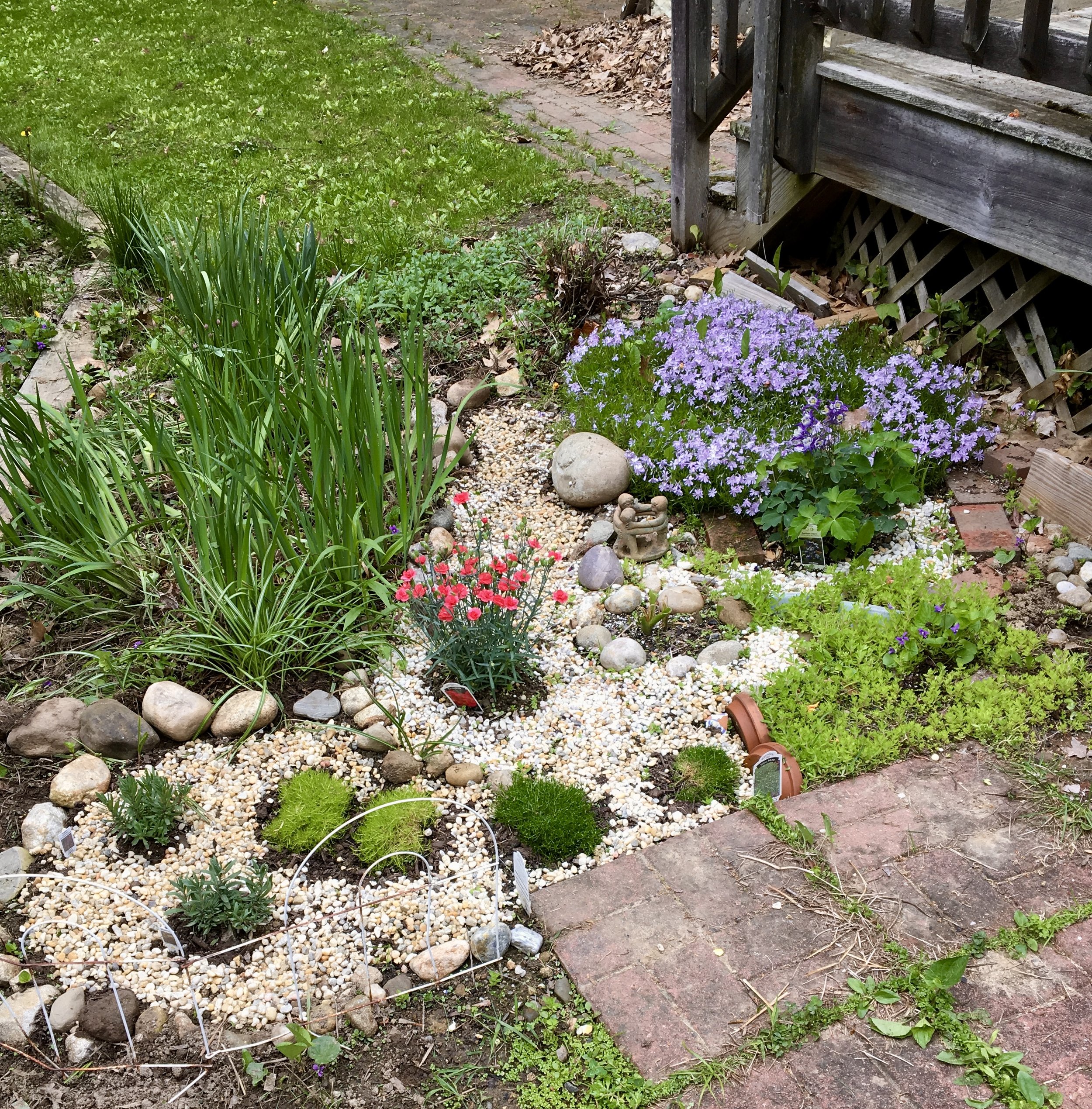
My miniature garden, planted by friends and family, stones added by me to deter weeds. Photo by Ali de Groot


Ali de Groot is director of publishing for Modern Memoirs, Inc.

Reflections from Andrew H. Stephens

Andrew H. Stephens, son of Eugene E. Stephens, recently completed the posthumous publication of his father’s collection of essays and poems entitled Blue Collar Rage with Modern Memoirs in 2024. This project took seven months from the day we started it until books arrived on Stephens’ doorstep. In honor of Father’s Day this month, we asked Stephens to reflect on what the publication process was like for him, and what it has meant to share his father’s writings with others.

In the opening pages of Blue Collar Rage, Andrew Stephens describes his father, Eugene Stephens, as a one-of-a-kind “Renaissance man” locked in an endless exploration of knowledge and the arts. Andrew writes, “I believe my father’s uniqueness came from the fact that not only was he an intellectual who loved to read, sculpt, paint, write poetry and pursue his philosophy, but at the same time he carried his lunch pail to work every day as a blue collar factory worker for thirty-five years.”

Over his lifetime, Eugene wrote his essays and reflections in 32 notebooks. Shortly before his death in 1993 at the age of 68, Eugene selected from those writings and drafted an introduction intended to be collected into a book and shared with his children and grandchildren. The book was never completed.

Andrew inherited the notebooks upon his father’s death and spent the next eight years transcribing and typing all of them into a single manuscript. From this, he produced a paperback book at a copy shop. He later commissioned Modern Memoirs to design and publish a hardcover version.


1. What was it like to transcribe your father’s notebooks?

Andrew Stephens: My father never discussed with me what he was writing, nor did he ever state why he was writing in his journals. When I began typing from his four decades of journal entries, I was focused solely on making progress and being as efficient with my time as possible. However, it quickly became apparent that I had a unique opportunity to learn more about my father’s intimate thoughts about his life and his journey to understand his spirituality. I started to slow down and attempted to observe how his thoughts evolved over this multi-decade period. What a gift it was for me, as I later realized.

2. What do you think your father understood his role as father to be?

Andrew Stephens: Great question and a challenging one for me to answer. My father grew up in a family struggling to make financial ends meet. Born before the Great Depression, he talked about the struggles he endured in early life. He aspired to work at a good company that would allow his two sons to “go to college,” which was the American Dream for his generation. Traditional father interactions in our neighborhood, like fishing, hunting, or pitching a baseball in the front yard, never happened. Interactions with my father centered on conversations at the dinner table, often revolving around history, science, and religion. These conversations, more often than not, turned into constructive but sometimes heated debates.

“I think he began to prepare his book when he came to the conclusion that his writings would be his legacy that he could pass down to his two sons and his grandchildren. A gift that keeps on giving.”

3. What do you think his intentions were in attempting to share his writings with you?

Andrew Stephens: I believe my father’s initial intention and motivation when he journaled into his notebooks was strictly for himself. It was his way to formulate his thinking, debate with himself, and to revise his ongoing worldview. He starved for intellectual conversation. It was a common occurrence for my brother and myself, when we visited as adults, that our father would initiate dinner conversations that would last until bedtime, with our father, at times, standing in the doorway still making his last point. I think he began to prepare his book when he came to the conclusion that his writings would be his legacy that he could pass down to his two sons and his grandchildren. A gift that keeps on giving.

4. What inspired you to publish the second, hardcover volume with Modern Memoirs? What are the most significant differences between the two books?

Andrew Stephens: I knew his writings were something special that had great value to me. I realized I needed to invest in creating a professional and well-made edition that would stand the test of time. Ultimately, out of respect for my father, I wanted the quality of the outside hardcover binding to match the quality of the inside content.

5. Your father self-developed skills in leather tooling and book binding. How did the cover design and binding selections you made at Modern Memoirs pay homage to that?

Andrew Stephens: The font for the cover and layout design was put together by my father himself. It was very unusual, and I could not replicate it. Therefore, on the first softcover edition, I did something very different. I was quite impressed that Modern Memoirs proactively suggested we attempt to match what he designed nearly thirty years ago. They were successful, and I know my father is looking down from above with a smile on his face at what ultimately became of his memoir in this beautifully crafted book.


Liz Sonnenberg is staff genealogist for Modern Memoirs, Inc.