Reflections from Raymond A. Lambert

Raymond A. Lambert, father of company president Megan St. Marie, published his book, Highgate Gleanings: Some Vermont History, Family Stories, and Verses, with Modern Memoirs in 2020. This memoir and family history book took about eight months to complete and was one of the first projects Megan worked on after coming to Modern Memoirs. She’s often said that working on this book with her father was one of the most meaningful experiences of her life, as it not only gave her practical experience in her early days as company president, but also affirmed her belief in the value of life-review writing and intergenerational storytelling as means of self-discovery and deepening familial connections. We asked Ray to reflect on what the publication process was like for him as he worked with Megan and Director of Publishing Ali de Groot, who oversaw design and production phases, and what it has meant to share his book with others.


1. You came to the Modern Memoirs office with binders and file boxes filled with years’ worth of writings, photographs, documents, and genealogy information, saying “There’s a book in here!” How does the resulting structure of Highgate Gleanings incorporate those various materials and evoke its title’s meaning?

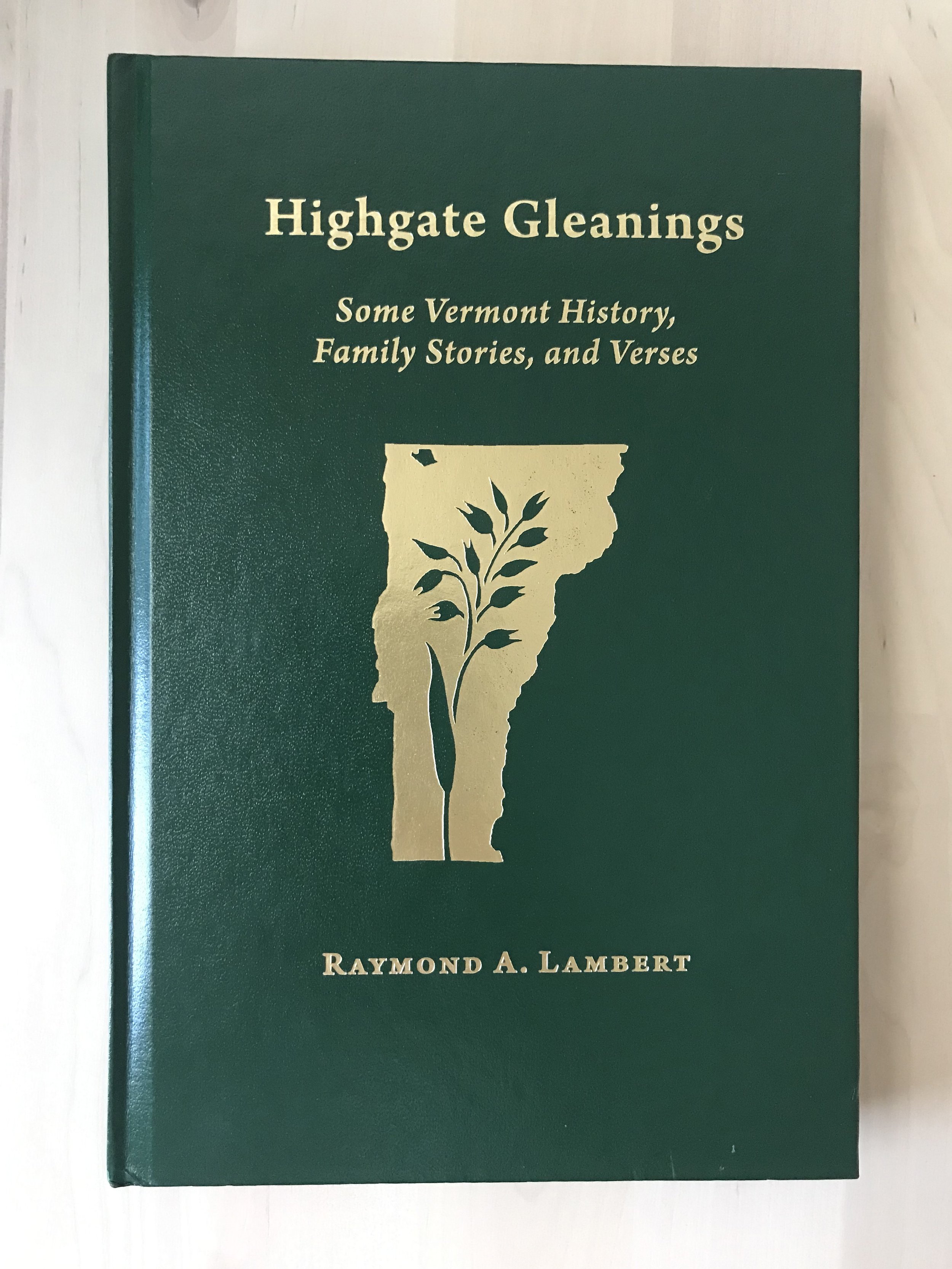
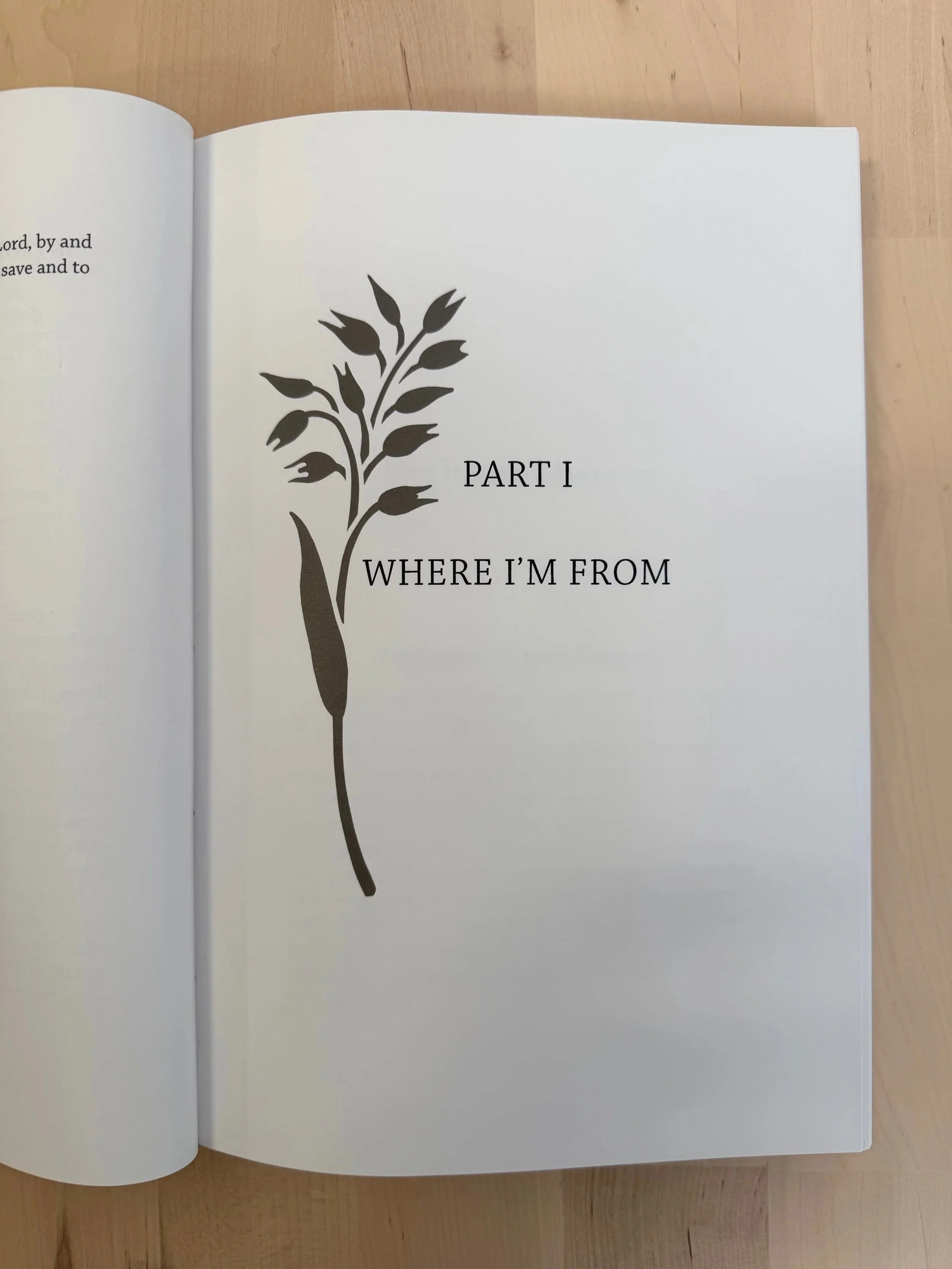
Raymond A. Lambert: The title, Highgate Gleanings, represented in the cover art and on part-start pages by a single oat stalk with oats ready to be gleaned, indicates that the gleanings contained in those four parts of the book come from many life experiences. The subtitle with its reference to various categories of these gleanings, Some Vermont History, Family Stories, and Verses affirms the wide range of material included in the book.

I did not attempt to write a chronological narrative of my life. That would have required much oversight with necessary corrections for the narrative to flow. Instead, Megan helped me in in the editorial process by creating a four-part structure around the themes of place (“Where I’m From”), heritage (“Who I’m From”), identity (“The Man I Am”), and spirituality (“Heart and Soul”).

2. What part of the publishing process surprised you, or gave you new insights into your life’s story or family history?

Raymond A. Lambert: I can’t say anything surprised me because I did not know what to expect! While I wrote the three required theses for my graduate degrees (M.A. in Religious Education at Catholic University, M.A. in School Guidance at St. Michael’s College; M.A. in School Administration at Castleton State College) and made a few copies of those papers to have on hand in case anyone might be interested in them, publishing a book was a totally new experience for me. It was easy to place my trust in Megan’s editorial work, and Ali de Groot was most helpful during the pre-publication process and oversight of the printing.

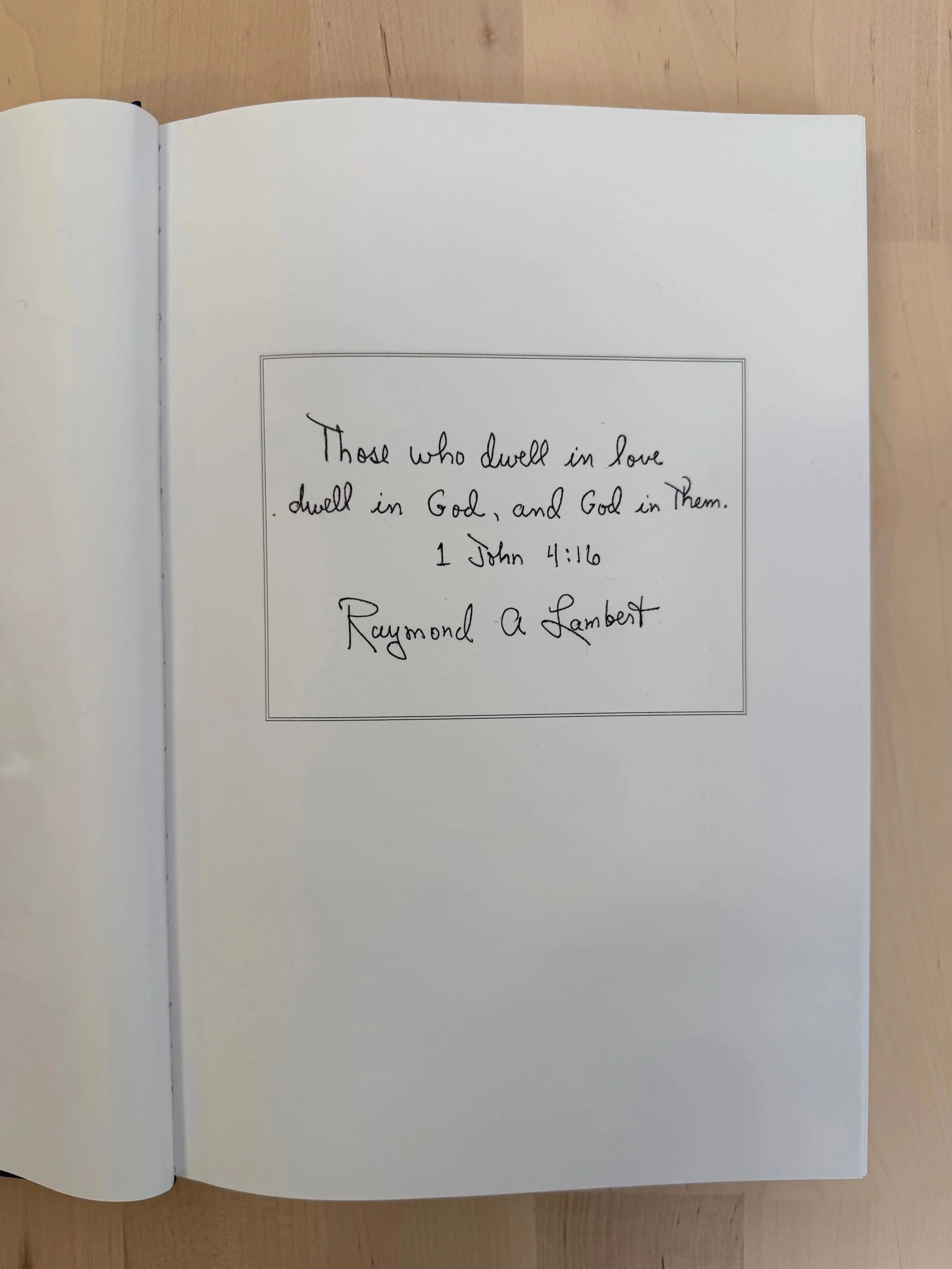
Two additions to my original materials perhaps deserve some comment here: Megan suggested that I include an epigraph at the front of the book in my own handwriting, as well as a “Legacy Letter” at the end of the book. It was easy for me to choose the epigraph, a favorite Bible verse that expresses a guiding principle of my faith: “Those who dwell in love dwell in God, and God in them,” (1 John 4:16). I hadn’t ever considered writing a Legacy Letter before, but with Megan’s encouragement, I wrote a draft that we then edited to capture the intangible gifts of love, values, hopes, and life lessons that I want to pass on to my loved ones.

Handwritten epigraph from Highgate Gleanings: Some Vermont History, Family Stories, and Verses

Illustrated part opening page from Highgate Gleanings: Some Vermont History, Family Stories, and Verses

3. You’ve researched your family history for decades, and your book includes some content from that work. What other parts of that research would you like to highlight here that didn’t make it to print?

Raymond A. Lambert: At last count, I’ve documented over 54,000 relatives on my family history website, with most of my ancestors traced back to France and French Canada. I share some family history in Highgate Gleanings, but it’s not a genealogy book with a comprehensive, sourced account of my lineage and ancestor and descendant charts. That would be a massive undertaking!

Discoveries of some rather interesting ancestors and relatives who immigrated to North America, particularly to Quebec and Acadia (now Nova Scotia), have prompted me to think about compiling a book with biographies of some of them. I feel particularly drawn to the stories of my Acadian relatives and ancestors who were impacted by Le Grand Dérangement, or the Great Expulsion, carried out by British colonial leaders in North America during the mid-eighteenth century. In his book A Great and Noble Scheme, historian John Mack Faragher refers to Le Grand Dérangement as the first instance of state-sponsored ethnic cleansing in North America. Out of a population of 18,000 Acadians alive at that time, I have found over 2,100 who are relatives and sixteen who are my direct ancestors. Included among those relatives and ancestors are some of the 10,000 Acadians who died as a result of this terrible moment in history, or about 56% of the population. Those who survived became a diasporic population, often acculturated and assimilated into the places where they ended up—the North American British colonies, England, France, Quebec—though one group of expelled Acadians decided to put down roots in present-day Louisiana, and we know their descendants today as the Cajuns.

A few years ago, Megan and I gave an online presentation based on my genealogy research, “Pain at the Root: Le Grand Dérangement and Our Family History,” hosted by the Franco American Centre at the University of Maine-Orono. My research continues with the expectation that there are many more Acadian relatives to be found. A trip to Nova Scotia a few years ago with visits to embarkation points was a very emotional experience. Who would have thought that genealogical research would do that? 


“I invited people to crowd-fund the printing cost, and I was thrilled when dozens upon dozens of people made contributions to pay for their own copies.”

4. How does the book’s cover and its interior design support its written content?


Raymond A. Lambert: The cover is really an invitation to explore within. The map superimposed on the green cover evokes Vermont as the Green Mountain State. The single oat stalk bearing its grains hints at the contents to be gleaned, un-shucked, or harvested by the reader. The small green space in the northwest corner bordering Quebec, Canada depicts the town of Highgate, where my twelve siblings and I were raised. The homestead in Highgate is now owned by a brother-in-law, who was married to my sister, Barbara. After Barbara’s death, he remarried, and he and his wife continue to host an annual family reunion at the homestead, bringing family members back for potluck, catching up, and what has been called a “no-talent show.” Truth be told, however, there are some very talented musicians, singers, and storytellers among us. 

The interior design of the book lends itself to reading the contents randomly. The table of contents works something like an index with parts, chapters, and many subheadings. Though the foreword might help the reader grasp the spirit and intent of the contents, it is not necessary to start from the beginning of the book. Reading any gleaning that might beckon is in order. Open the book to any page, and read on.

5. How have you shared your book with others? What are some of the best responses you’ve received?

Raymond A. Lambert: In the foreword to the book I wrote, “This collection of gleanings, stories and memories and some doggerel (bad poetry) is intended for my brothers and sisters, children, grandchildren, nieces and nephews, friends, and neighbors, and some folks in my hometown, Highgate, Vermont. Read as and if you wish.” Since I have such a large extended family, I invited people to crowd-fund the printing cost, and I was thrilled when dozens upon dozens of people made contributions to pay for their own copies, and in many cases, to cover the cost of copies for other people. It’s been very rewarding to see family and friends enjoying the book. Just recently, I learned that my youngest brother’s ten-year-old granddaughter often rereads it to learn more about her ancestors and relatives.

The Highgate Public Library invited me to give a talk about the book soon after it was published, and that was a treat. Others have commented about individuals mentioned in the book and some of the Highgate town history. I must say that the most endearing response I have received has been from my daughter Megan St. Marie, which she writes about in the Introduction to this piece. If any parent-and-child pair reading this blog has the inclination to work together on a project like this, don’t hesitate! The gifts of writing, reminiscing, and sharing will be ones you’ll always treasure, in addition to the book you create.


Megan St. Marie is president of Modern Memoirs, Inc.

Reflections from Mary Jane Bower

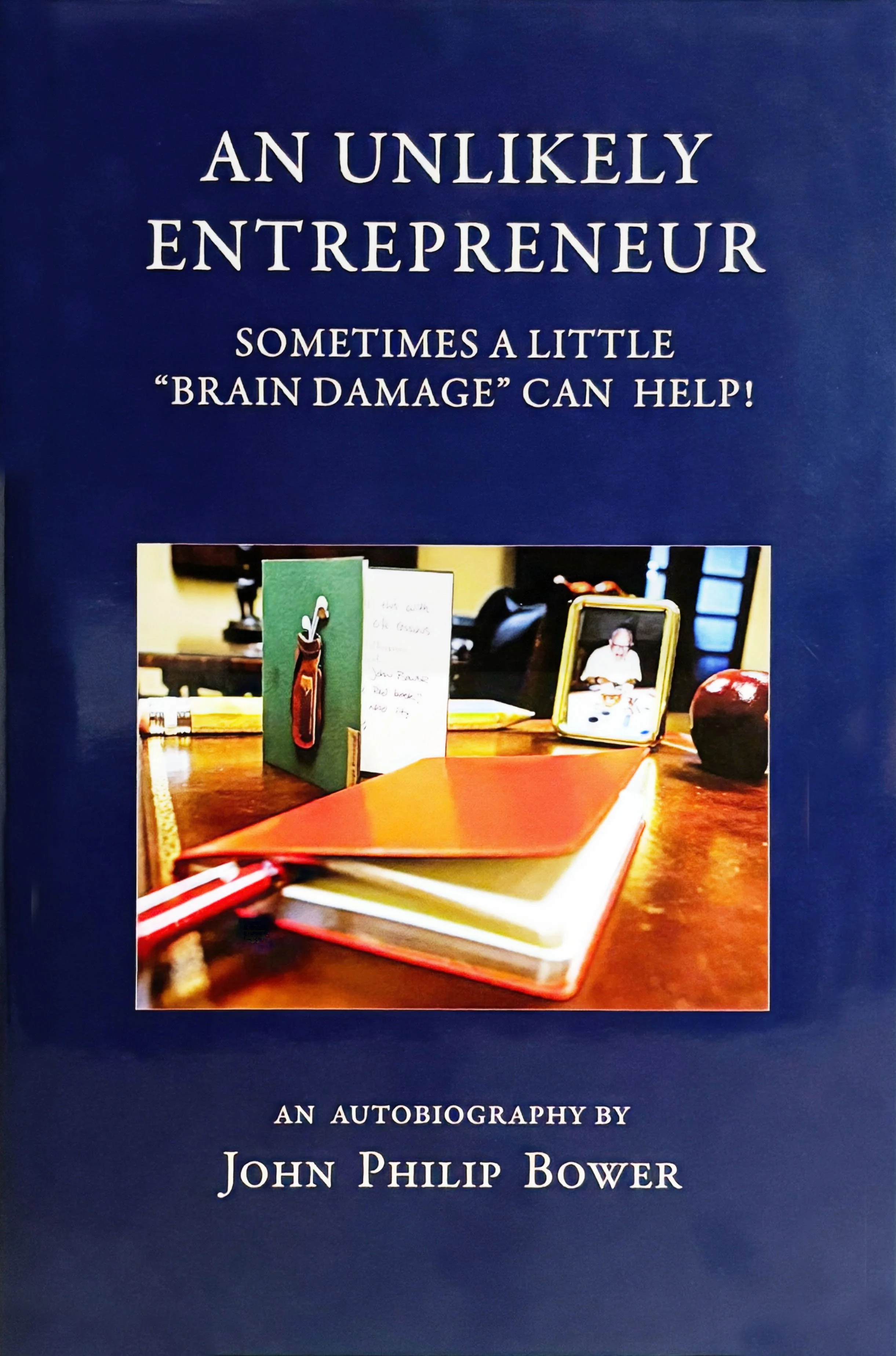
John Philip Bower collaborated with his wife, Mary Jane, to publish An Unlikely Entrepreneur with Modern Memoirs in 2015. This autobiography took about 1-1/2 years to complete, with John and Mary Jane working especially closely with Modern Memoirs founder, Kitty Axelson-Berry. John began the book just before being diagnosed with frontotemporal dementia with the variant PPA, which first takes away speaking, reading, and understanding. Now he lives in a memory care home. We asked Mary Jane to reflect on what the publication process was like for her and her husband, and what it has meant to share John’s—their—book with others.


1. What prompted you and John to undertake the book project in the first place?

Mary Jane Bower: Actually, it was John’s idea to start writing stories down. Our children were both budding entrepreneurs, and he had successfully been through the mill with that, so he said, “I’ve got some experiences I want to share with my kids.” As he says in the book, our son had given him a journal, a red book, saying, “Put your stories in here.”

Of course, for John, being dyslexic and not that great at the typewriter—typing was too much to even think about. But then he just started writing story after story. He would get up early in the morning, like he usually did, and he would type. He would print out whatever that story was and then leave it for me to read. When I got up around 7:00 or 7:30, there’d be a little story sitting on the ottoman. I would read it, edit it, and then we’d sit and talk about it. And I’d often say, “Well, that’s not how I remember it!” This was day after day after day. I couldn’t believe that he really stuck with it!

We didn’t think about making a book at the time. But then there got to be so many stories and so much crossover that I said, “This could be a book, or at least a self-published something-or-other of your thoughts. But I don’t have the first idea how to even approach that.” So that’s how it started—with him. He and I both couldn’t believe he kept going at it.

2. How did the process unfold from there?

Mary Jane Bower: There were two phases: before Kitty and after Kitty; before Modern Memoirs and after Modern Memoirs. At one point, we knew we needed a professional. Through a chain of connections, we found Kitty, an editor and founder of a business that specialized in memoirs. As we got into the meat of the work with Kitty, she actually came to our house in Florida for a week. Just before that point, John was sort of stuck, and so I asked Kitty, “Why don’t you come down here? We can just talk to you, and you can write it down.”

John’s speech and language were disintegrating as the process went along. By the time we enlisted Kitty, I was helping a lot; John was not writing as much. We were just making sense of what he’d written, figuring out what was missing. But in terms of editing the book itself, I did a lot of the work on the galleys. I would read to him out loud, and we would discuss the writing together. When we got to the book design, I took care of all the photographs. I gathered them and added the captions. I also wrote the foreword and another part in the book. So this project was a real collaboration.

3. From your perspective, what were the rewards of conducting a life review?

Mary Jane Bower: It was just the most wonderful gift to ourselves, to spend that kind of time together, reviewing everything that’s happened to us in our lives. We met when I was 14 and he was 16. Writing the book was very unique and special, and I just can’t imagine our life without having done that. He was telling his story, but it’s really our story, and the book captures it. Also, by this time, John was having trouble speaking, so he couldn’t carry on a conversation with people, but he would give them his book. That was a great help to him. People could get to know who he is in his own voice, especially reading the first half of the book. You get into the business part, and it’s not as much fun to read for someone who’s not in business. But there’s also a chapter on alcoholism and recovery, and a chapter on golf.

It gave him such joy to share his life with others through the book. And when he got to where he couldn’t even write very well, he still would write “from John Bower” in the front of the book, and he was very proud of that. It was a way for him to feel good about himself during this difficult, long journey.

4. What feedback have you gotten from others with whom you shared it?

Mary Jane Bower: We’ve heard really good things. When we finished the project, John still had his business, and he was still speaking somewhat. Upon receiving the books, we had a book party, a reception, at the country club that we belong to, and we invited a lot of people from his business days to come. We sent postcards out, and it was wonderful how many showed up. People were shocked and said, “I didn’t know you were writing a book!” John was thrilled, because he had mentored so many people over the years, and these people came—lots of friends and family. The book party was so much fun for him. We’d ordered around 150 copies, so everybody there took a book home. We gave books to each staff member of our company, too. I kept a whole file of cards that people wrote in response. Most of it was just so kind, telling John and me how much he’s meant to them in their lives. It was an affirmation of the kind of man he is.

5. It has been 10 years since you published the book. How do you and John use it today?

Mary Jane Bower: It’s handy to have around when the time is right. When John was still home, we had a caregiver. We gave her the book, and she began reading it out loud to him when she was visiting. Now, John is in memory care and is non-verbal. He took copies of the book with him, and the caregivers there started reading one of them and passing it around, so that was great, too. But he also has a copy on his bedside table, and we read from it often! We’ll go outside, sit in the gazebo, and just go through the pictures. Then I’ll pick a section of the book to read, and he just sits in rapt attention.

In August we celebrated our 57th wedding anniversary, and I read to him for hours about our first meeting and our first year of marriage. He loves it. He keeps looking at me as if to say, “I can’t believe we actually wrote a book!” He’s given me a lot of credit. And how many women have a man who writes about the love he has for them? It was in his simple way, in his simple words, but it’s wonderful to read and hear that. Also, our grandchildren have a copy of the book. They’re 21, 18, and twins who are 14. A year ago, we were at our summer cottage. One evening after dinner, we all sat around in the living room, and the twins read out loud from the book. That was very special. We just knew it was John’s last time to be at the cottage, and the kids were able to ask questions. I don’t know how much of the rest of the book they’ve read yet, but it’s there when they are ready.

It’s a gift that keeps on giving, I keep saying, because this book has really saved me. If John gets upset about something, I’ll pull the book out and say, “Oh, let’s look at this for a while.” And he just calms right down. I am so happy that we did that. It was, overall, such an interesting learning experience as to how you put a book together. Naturally I sometimes read it and think, “We missed some stories that should be in there! I would have changed this, and that, and the other thing…”. But I’m just thrilled that it’s in our lives, and that he did that. We never knew that it would be such a touchstone for us over these challenging years.

6. Is there anything else you would like to add?

Mary Jane Bower: I want to say how wonderful Kitty was with us, and with John. (And still is, because she still stays in contact, which is just wonderful.) I consider her a good friend, even though we haven’t spent that much time in person together. She’s such a special person, and she was exactly the right person to be helping John with this, with her open heart, and empathy, and encouragement. She was so positive all the time, and he loved having face time with her. It’s wonderful to be with someone who appreciates you. She really appreciated him, and us as a couple.

I think probably the most important part for anyone thinking about creating a book is that you all at Modern Memoirs do everything with such loving care, seriousness, and open hearts, with clear minds to help us wade through all this “life stuff” and make sense of it.


Overcoming the #1 Fear of Writers: Mediocrity

I’m a book designer here at Modern Memoirs Inc., and I was recently on the phone with a friend. He is a highly educated and prolific reader, but more importantly, he's a psychologist who, having spent years working in a high-security prison, deals with the deepest, most ethically complex human stories imaginable.

We were discussing a recent novel self-published by a former co-worker of his—a fictional piece clearly drawn from their time working together. My friend mentioned that the author actually let him know: "Guess what? You’re a character in my book—under a pseudonym, of course!" So he picked it up, eager to see how his real-life role translated into fiction.

He confessed that the writing was so clumsy, he couldn't even finish it. He couldn't follow the story, even when he was one of the characters. We shared a good chuckle, but then his voice got serious. "That's exactly why I don't write any books," he admitted. "You know I have all the research and the notes—I've got incredible stories. But my real fear is that I'll produce something mediocre or put something out into the world that I shouldn't have."

Paralysis of the Critical Reader


“Your greatest value isn't the perfection of your prose; it's the power of your perspective.”


If you're reading this, you might recognize that fear instantly. It’s the constant, cold whisper that tells every writer working on a deeply personal project they aren’t qualified, that their prose is awkward, or that their story isn't important enough to commit to print. This worry—the fear of publishing something that falls short of your own high standards, the worry of mediocrity—can be the single biggest barrier to finishing your book.

The irony is that the most critical readers—the people who value books and understand sensitive narratives, like my friend—are often the ones paralyzed by this fear. Because you know what compelling writing looks like, the gap between your raw first draft and the polished work in your head feels enormous. The worry isn't about simply writing a mediocre book; it's about the permanence of creative exposure. You are attaching your name, your work, and your legacy to this artifact.

But here is the essential truth I've learned from witnessing hundreds of powerful stories: Your greatest value isn't the perfection of your prose; it's the power of your perspective. The fear of clumsy execution—the underlying fear of mediocrity—dissolves not through solo bravery, but through objective, professional guidance of the sort that we at Modern Memoirs can provide.

Excellent Execution: What Professionals Do

Engaging publishing professionals allows for the necessary distance and objectivity required to turn raw truth into enduring art. The goal is simple: to elevate your content to the standards you already hold as a reader.

  • Editor's Objective: A great editor polishes the prose, fixes structural flaws, and smooths the rhythm. Our editors ensure that the language serves the story without distracting from it, and focuses on details that support the narrative.

  • Designer's Scaffolding: As the designer, my role is to create an elegant, authoritative visual structure. The appearance of the words on the page, the white space in the margins, the humility or assertion of the chapter titles, the amount and location of photos, all these details take the highly skilled eye of a book designer. Nuances in proportion, emphasis, color, shading, and font choice reflect the tone and intentions of the author. This professional scaffolding makes your work look credible and polished, instantly elevating the reader's perception.

You focus on the necessary vulnerability of the story; we focus on the necessary flawlessness of the presentation.

Honesty vs. Liability: The Professional Protocol


“Focus on the telling, and then find the objective help needed to elevate the craft.”

Once we remove all fear of clumsy execution by guaranteeing a polished final product, what are you left with? You are left with the core decision: How honest will I be in the telling?


This is where some real work happens: the goal is to move from brute honesty toward intentional vulnerability. Pure, unmitigated honesty is a goal for every powerful story, but it's rarely practical for a published book due to real-world liabilities. That's precisely why our professional team guides you through this ethical process.

Honesty is not about blaming others or writing the names of people who've wronged you. Pain is much deeper than a name or a legal liability. The purpose of our objective eye is to help you remove the specifics and names that create liability (and detract from the story) and instead include the emotional context you want. The final book must ensure your memory is captured as you remember it—with grace and without compromising the integrity of the project.

The most impactful books are those that acknowledge human fallibility. Your readers don't want a perfect, untouchable hero; they want the complexity of a human being. When you bravely share the difficulty and the doubts—even when imperfectly phrased in the first draft—this is the magnetic quality that turns a book into a legacy. Don't let the fear of an ungainly sentence stop a great story. Focus on the telling, and then find the objective help needed to elevate the craft.

If you're still wrestling with that fear, remember you're not alone. The world is full of authors who feared their work was too clumsy or too big to succeed. For instance, right now, with the buzz around yet another new Frankenstein film, consider its author, Mary Shelley. When she began writing at the age of 18, her novel's premise was massive, incorporating science, philosophy, and morality. Despite the sheer ambition of the project—writing an epic tale at such a young age—she pushed through the struggle. This validates the client who worries their life story is simply too big (or too dull) for a book. When you finally finish that manuscript—you’ll feel the same thrilling moment of relief: "It's Alive!"

The greatest assurance I can offer is this: With professional assistance, your name won’t be attached to a clumsy execution. Our expertise at Modern Memoirs Inc. exists to transform your powerful perspective into an authoritative, polished, and enduring work that commands credibility.

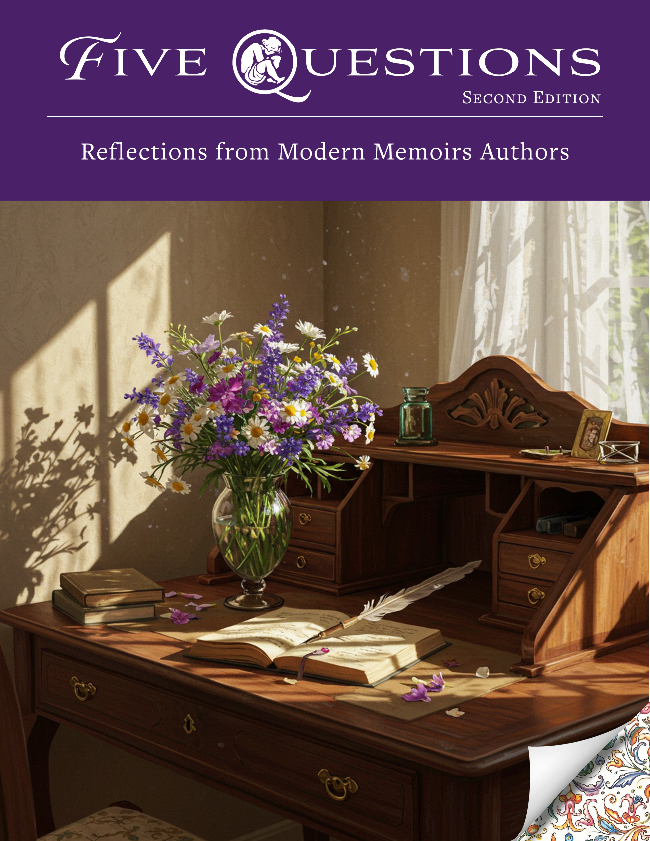
But don’t take my word for it! I encourage you to explore the full spectrum of our clients' author journeys in our ongoing series, Five Questions: Reflections from Modern Memoirs Authors, First Edition (2024) and Second Edition (2025). Reading their reflections in interviews conducted by Genealogist Liz Sonnenberg will show you how they successfully navigated the emotional tightrope of bringing their books to print. Then you can take the leap and contact Modern Memoirs to help you realize your publishing goals.


A Look Back at Modern Memoirs Publishing Interns

Interns have often been part of the inner workings at Modern Memoirs over our 30+ years. We don’t have an intern currently, but I am sure we will host them again in the future—perhaps even next semester—and in the meantime, I’ve been reflecting on how rewarding it’s been to engage with them in the past.


“My own internship experiences in college and graduate school had been greatly important to my professional development, and I hoped to provide the same sort of experience to students here.”


Company founder Kitty Axelson-Berry supervised several interns and volunteers during her time leading Modern Memoirs. When my husband, Sean, and I bought the company in 2019, I knew I wanted to do the same. My own internship experiences in college and graduate school were greatly important to my professional development, and I hoped to provide the same sort of experience to students here. I also enjoyed mentoring interns and teaching assistants during my previous nonprofit, library, and academic positions, so I knew I would get personal satisfaction from welcoming undergraduates and graduate students to Modern Memoirs.

As a parent of teens and twenty-somethings working hard to make their way in life, I made a commitment that each internship here would be funded since I wanted young people working with us to have the clearest possible indication of our business’s investment in them. Modern Memoirs is located in Amherst, Massachusetts, in a region home to the Five College consortium (comprised of my alma mater, Smith College, as well as Mt. Holyoke College, Amherst College, Hampshire College, and UMass-Amherst), so I knew there would be a large pool of internship applicants. In the fall of 2019, I set my sights on hiring someone the following year.

The pandemic put the brakes on that aspiration, however. Director of Publishing Ali de Groot and I shepherded the business through remote work arrangements, then we moved to new offices in summer 2020, I hired Genealogist Liz Sonnenberg to join our staff that fall, and my two youngest children spent afternoons in the office for remote schooling. Internship plans were decidedly on the back burner.

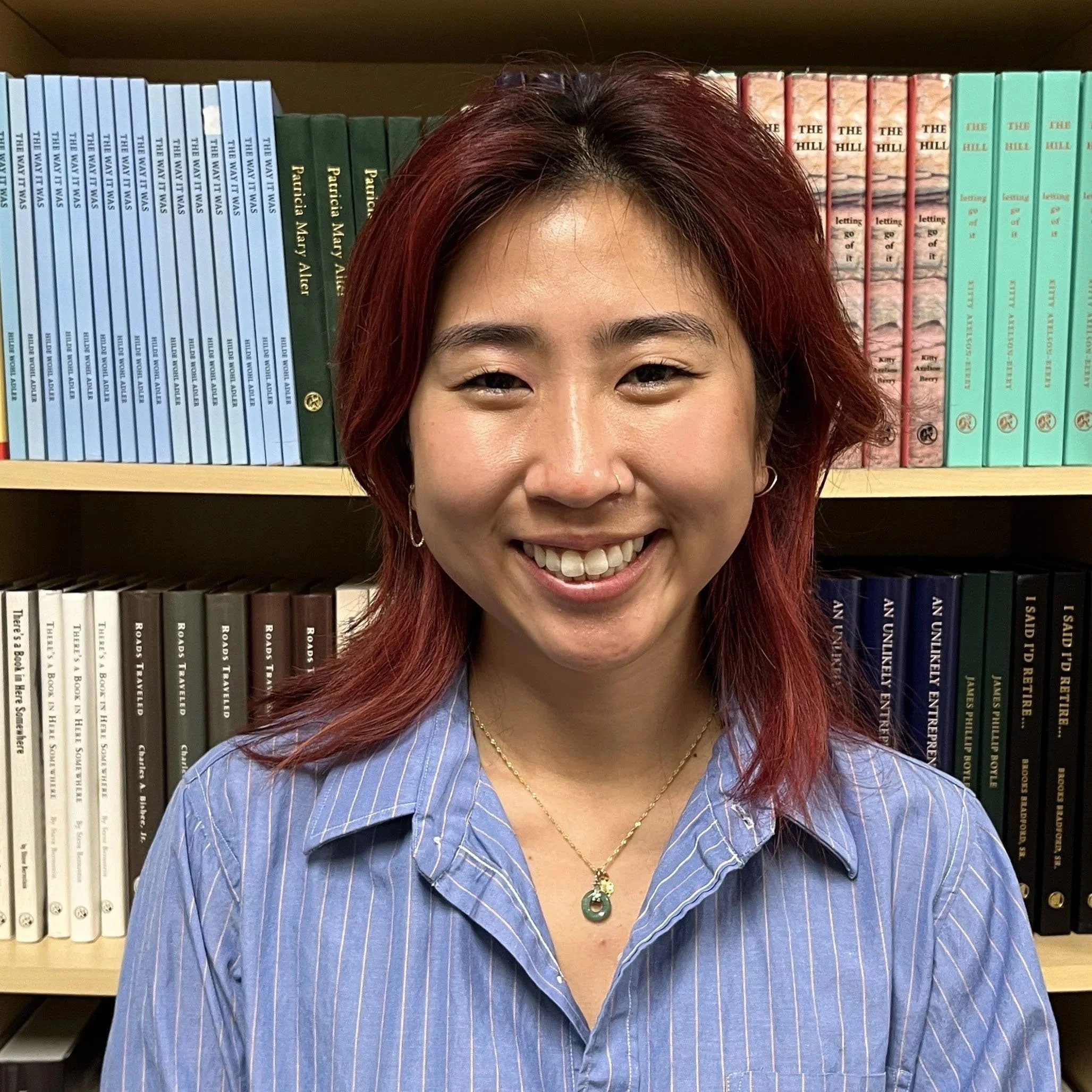
Lauryn Small

Then, in late spring 2021, I received an email from a Smith College student, Lauryn Small, hoping to work with us that summer. It was an easy decision to give her an internship, and she set the bar high for all who followed. The initiative Lauryn displayed in reaching out to me carried into her performance at the office, where she helped us launch our monthly newsletter, aided me in managing social media, worked with Ali to write a blog post, and also supported the staff in many client-facing tasks.

When Lauryn left to return to Smith for her senior year, I focused on recruiting not another intern, but a new staff member, Book Designer Nicole Miller, who joined Modern Memoirs in November 2021. She fit right into our team, with marketing expertise to boot.

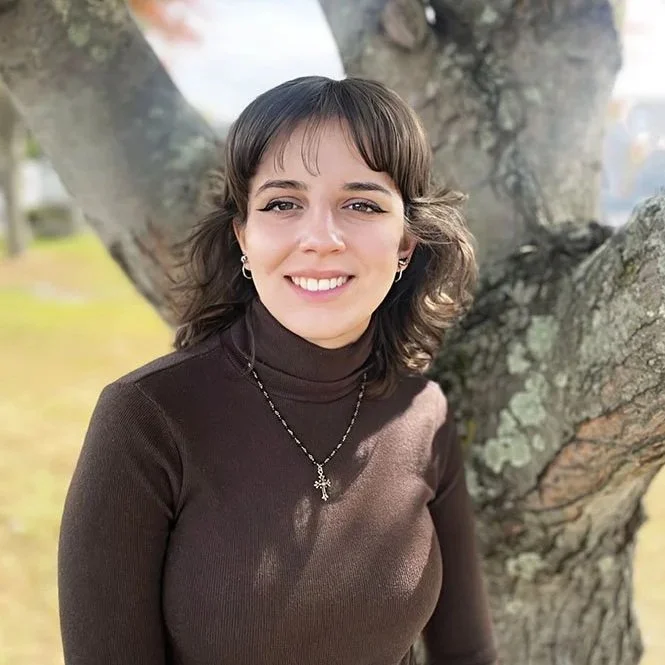
Emma Solis

Given the positive experience we had with Lauryn and the full plates I saw my growing staff managing, I decided to recruit another intern in summer 2022. Like Lauryn, Emma Solis joined us with funding through the Smith College PRAXIS program, which required them to complete over 200 hours of service. We found plenty of work for them to do! One of Emma’s first tasks was to process our summer solstice mailing, and we quickly realized that she was ready for more substantive work, as well. Her strong writing chops made me encourage her to contribute to our blog, and her eagerness to learn about all parts of the business allowed her to support staff in tasks related to all phases of the publishing process—editorial, design, production, and marketing. We were very sorry to see her go at summer’s end.

Charlie Mark

In the fall of 2022, students from two different schools applied for internships. Charlie Mark was finishing up high school in an alternative program called Light House, based in nearby Holyoke, while Cori Garrett-Goodyear was enrolled in Bay Path University’s MFA program in Creative Nonfiction. Both started in January 2023—and the timing couldn’t have been better! That was the month Sean and I decided to move offices again, and I honestly don’t know how we would have managed the move without help from Charlie and Cori, who packed up and then reshelved our entire library of client books, and much more.

Cori Garrett-Goodyear

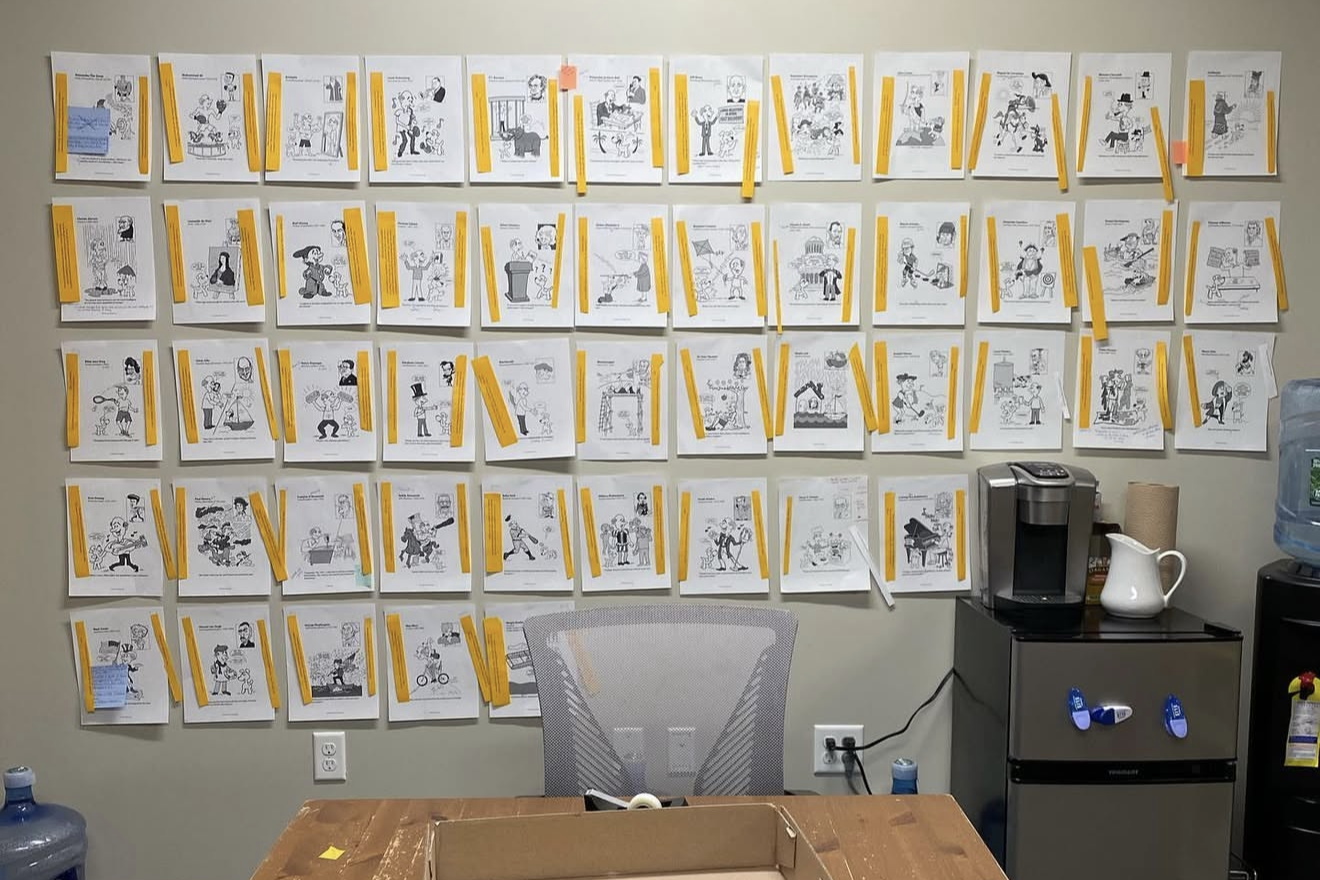
Once we were all set up in our new digs, both interns threw themselves into any task we sent their way. Though they had more limited hours per week than either Lauryn or Emma did as PRAXIS program students at Smith, they helped with administrative, client-facing, and marketing tasks, while also contributing to our blog. Particularly memorable is Cori’s mature, can-do attitude. In one massive book project,  she assisted Ali de Groot with the complicated structural edit of a manuscript, turning our conference room wall into a veritable map of pages as they refined the sequence of vignettes and images to the author’s supreme satisfaction.

Modern Memoirs conference room wall with mock-up

I had planned to hire a summer 2023 intern, but just as Charlie and Cori were wrapping up their time with us, former intern Emma Solis contacted me for advice about her post-college plans. As we sat together over lunch, she shared that she had decided to stay in the Amherst area, and I couldn’t resist asking her if she might be interested in working with Modern Memoirs again—this time as a full staff member, not as an intern. How lucky we were that she said yes! She already knew our systems and our staff, and we had great confidence in her abilities. Her too-short tenure as Publishing Associate was a bright spot for Modern Memoirs. (Here she writes about lessons learned before moving on to New York City in October 2024.)

Olivia Go

Another Smith student, Olivia Go, joined us for a fall 2023 internship while Emma was still here. If you haven’t read Olivia’s blog posts, I hope you will take the time to do so—she truly has a gift. Like all of her predecessors, Olivia displayed great eagerness to engage in all parts of the business, and she worked closely with Emma to update our photographic archive of client projects while also cheerfully helping with any task passed her way. In fact, I offered to extend her internship through the spring 2024 semester. Happily, she agreed.

Lily Fitzgerald

I did not hire a summer 2024 intern, instead setting my sights on recruiting someone who could work with us for the full 2024/2025 academic year. Olivia’s continuity with the business had been a real help, and I wanted to replicate that stability with a new publishing intern. UMass-Amherst senior Lily Fitzgerald fit the bill. A student in the university’s Honors College, Lily brought a passion for writing and marketing know-how to her role. Her support around social media postings and a revival of our LinkedIn presence were especially helpful. I also always knew I could count on her for runs to the copy shop or FedEx box—once she pulled up just in the nick of time to meet the delivery person’s truck with an urgent, time-sensitive delivery. She texted me triumphantly after the handoff, “Just made it! It was kinda exciting. I felt like I was in a movie! (laughing-crying emoji).”

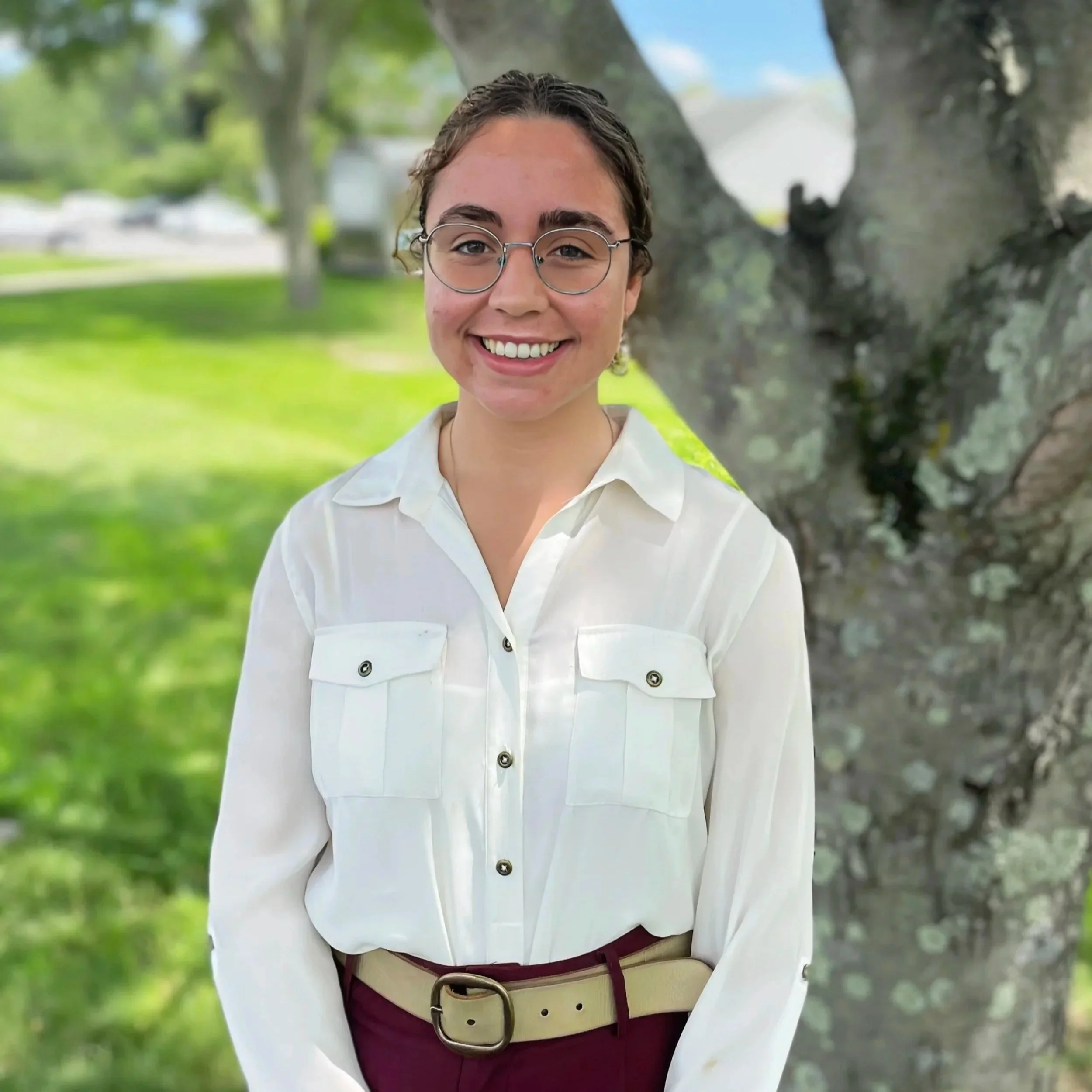
Cecelia Allentuck

Our most recent intern, Cecelia Allentuck, was home for the summer of 2025 after her first year of studies at St. Andrews University in Scotland. Cece’s sunny enthusiasm filled the room when I interviewed her, and she brought that attitude into all she did. She offered great support in boosting our social media presence, and she seemed to especially delight in working with me on her blog posts.

My teaching background makes me grateful for the chance to work with student interns, especially when they are interested in writing blog posts and newsletter content for Modern Memoirs. Helping them home in on a topic, editing their drafts, and then seeing them get to share their work with readers is greatly satisfying. In that way, working with interns dovetails nicely with the editorial work I do with Modern Memoirs clients. What a joy it is to help people find their voices and share their stories, whether they are people I hire, or people who hire my staff and me.

Do you know a student who might be interested in a spring 2026 publishing internship with Modern Memoirs? If so, send them my way!


Megan St. Marie is president of Modern Memoirs, Inc.

Reflections from Margaret Marcus, Part 2

Margaret Marcus is a repeat client with Modern Memoirs. Her first memoir, entitled Windows Aglow and Other Stories from My Mother’s Life, was published in 2019, and her second memoir, entitled Suddenly Upside Down: Recollections from Pandemic Years 2020 and 2021, came out in 2022. The first project took five months to complete, and the second, just four months. In this two-part blog series, we ask Marcus to reflect on what the publication process was like for her, and what it has meant to share her books with others. In Part 2, below, we discuss Suddenly Upside Down.


1. What inspired you to write this book?

Margaret Marcus: In April of 2020, my cousin Elizabeth and I found ourselves wondering about our paternal grandmother, whom we had never known. She had been a victim of the 1918 flu epidemic. Or so I thought. Elizabeth wasn’t sure about that. But, we agreed, considering the great pandemic to which our present situation was already being compared, wouldn’t it be interesting to know what life was like for our grandmother and her family during that time, whatever the circumstances of her death?

“I know what I’m going to do,” Elizabeth announced. “Record things related to life during the pandemic for my grandchildren.”

“What a good idea,” I said. “I believe I’ll do that, too.”

Thus the beginning of Suddenly Upside Down.


“The writing process is life-affirming for me. It requires time and reflection and focus, and it inevitably brings about perspective.”

2. In an early chapter you say, “The pandemic darkened our world, but in its wake, it brought along surprisingly bright consequences.” What was the brightest consequence of all?


Margaret Marcus: As soon as schools shut down in March of 2020, I began teaching language arts to my elementary and middle school grandchildren. Our Zoom encounters continued throughout the rest of that school year, and in one way or another, I remained involved as their schools and teachers came back online in a more organized way that following fall. I loved designing lessons for each of the children, and I proudly made a mess of my command center, the dining room table.

3. What did the pandemic reveal to you about teaching and learning?

Margaret Marcus: I had an opportunity to discover the differing gifts of my grandchildren—and to know them as learners, each in his or her own unique way. I consider myself lucky to have had this opportunity.

4. You detail the many ways in which everyday life was turned “suddenly upside down” by the pandemic and other events in 2020 and 2021. How did the writing process help give you perspective on all that happened?

Margaret Marcus: The writing process is life-affirming for me. It requires time and reflection and focus, and it inevitably brings about perspective. Knowing that I’ve created something by evening that didn’t exist that morning makes me happy. During the pandemic, when so much was stalled and uncertain, the writing process energized me.

5. What artwork did you choose for the front and back covers of your book? Why did you choose those pieces?

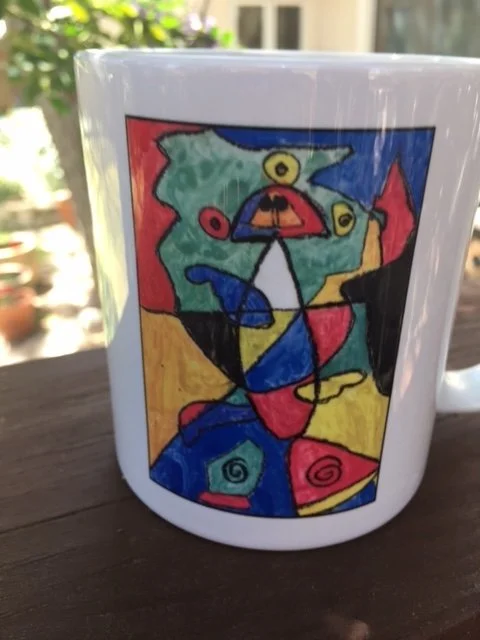
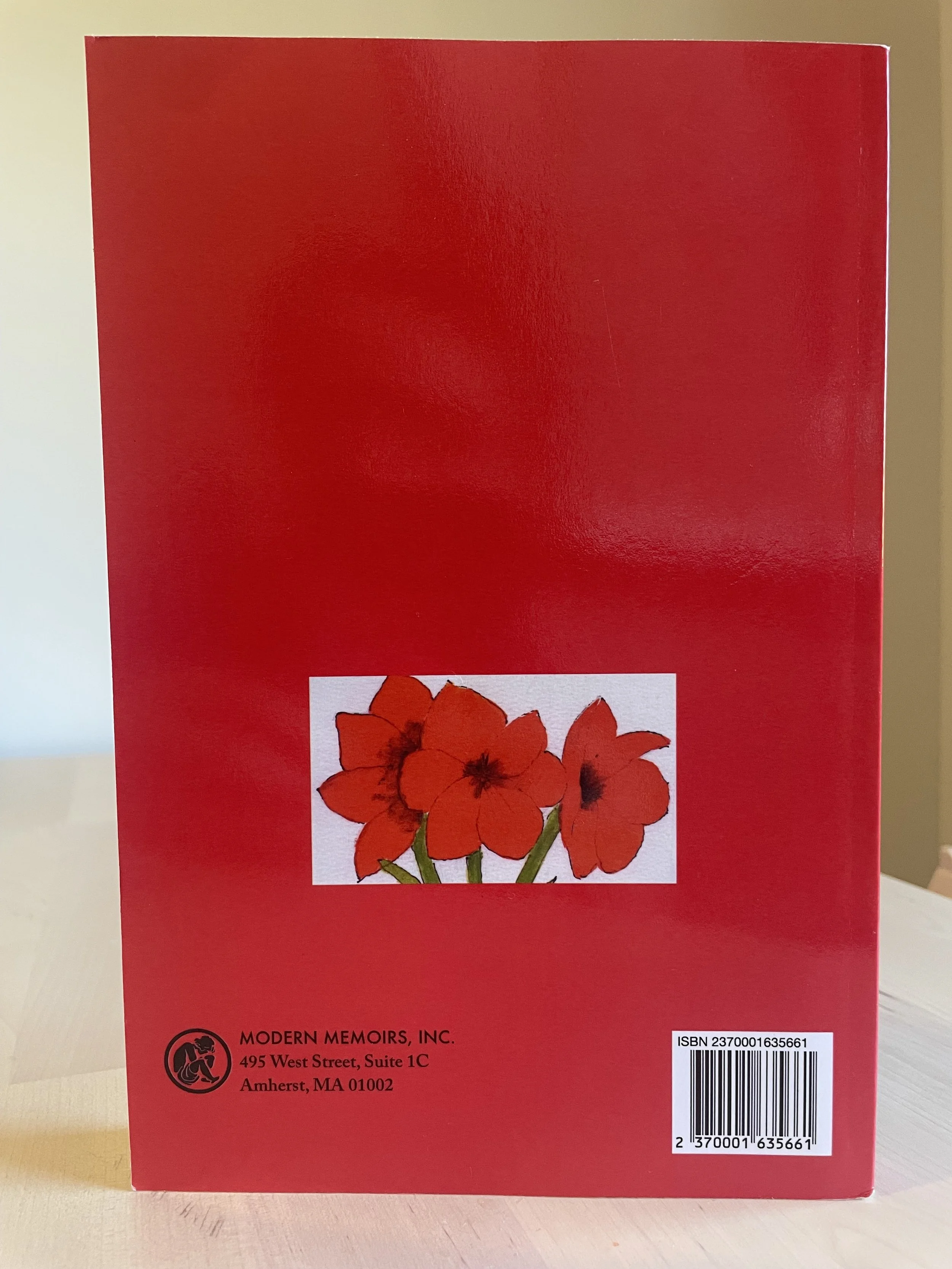
Margaret Marcus: The artwork on the front cover is the reconfiguring of a design my grandson Samuel, age nine or so at the time, did in school and which got put on a coffee mug for me. I sent off a photograph of the mug, and Modern Memoirs’ talented book designer took it from there. How she did it so creatively, I have no idea! Meanwhile, I asked a good friend to do a painting of an amaryllis for the back cover. “Amaryllis” is the title of the last chapter in my book, and I looked at it as a bright symbol of hope for getting things turned right-side up again.


Liz Sonnenberg is staff genealogist for Modern Memoirs, Inc.

Reflections from Margaret Marcus, Part 1

Margaret Marcus is a repeat client with Modern Memoirs. Her first memoir, entitled Windows Aglow and Other Stories from My Mother's Life, was published in 2019, and her second memoir, entitled Suddenly Upside Down: Recollections from Pandemic Years 2020 and 2021, came out in 2022. The first project took five months to complete, and the second, just four months. In this two-part blog series, we ask Marcus to reflect on what the publication process was like for her, and what it has meant to share her books with others. In Part 1, below, we discuss Windows Aglow.


1. This book is written about your mother in the third person, with quotes and excerpts by your mother throughout. What sources were available to you in reconstructing the story of her life?

Margaret Marcus: I was very lucky to have some of my mother’s journals, the remarkable scrapbooks she kept during university days, letters written by or about her during important times in her life, and wonderful photographs. For years all of this was stored away in my brother’s house and then in mine, and it wasn’t until I determined to write a memoir about her that I investigated these materials. I was thirty when my mother died, and now I was in my seventies.

2. You noted that your mother “carefully preserved memories” in these materials. How did you go about preserving her memories further, in your own way?

Margaret Marcus: My challenge was to design a story of my mother that included what I learned from these materials, most of it relating to her life before I was part of it, but that also included my own memories of her. Over a good number of years, I had written sketches about her, not in any kind of order, and how would I now structure a memoir to incorporate all of this in a meaningful way? In the end, I created sections, each one having its own chapters. The end result is hardly a chronological record, but more of a collage.


“I imagine farmhouse windows aglow that winter night…” with “lamps lit and life simple, all warm and secure.”

3. In cases in which your mother supplied no commentary with these materials, what did you do to flesh out the details of the events in her life?


Margaret Marcus: I did a good bit of detective work. I had been aware of the rough contours of my mother’s life, but how did what I discovered among her disparate materials fit together? What did I learn about her that was new to me? I asked myself lots of questions, and while it’s satisfying to know that I found answers for a good number of them, still others remain. They, too, appear on the pages of my book.

4. How did writing this book help to shape your understanding of your mother? Have you heard feedback from family members who knew her (or didn’t know her) as to their understanding of your mother after reading these stories?

Margaret Marcus: Writing Windows Aglow was a wonderful experience. Without a doubt, it broadened my understanding of and admiration for my mother. My children and friends who had never known her were thoughtful and generous readers, but above all else, it was my brother, cousins, and family friends who did know and love her for whom the book was most meaningful. After all these years our bonds tightened because of it.

5. Why did you select Windows Aglow as the title?

Margaret Marcus: Towards the end of my first chapter, I describe a scene on the farm in Vermont where my mother spent her childhood. I found myself writing “I imagine farmhouse windows aglow that winter night…” with “lamps lit and life simple, all warm and secure.” Aha, windows aglow! That would be my title!


Liz Sonnenberg is staff genealogist for Modern Memoirs, Inc.