An Offering

A blog post by Publishing Intern Pam Gainer


“Ring the bells that still can ring,
forget your perfect offering,
there is a crack, a crack in everything,
that’s how the light gets in.”
—Leonard Cohen, “Anthem”
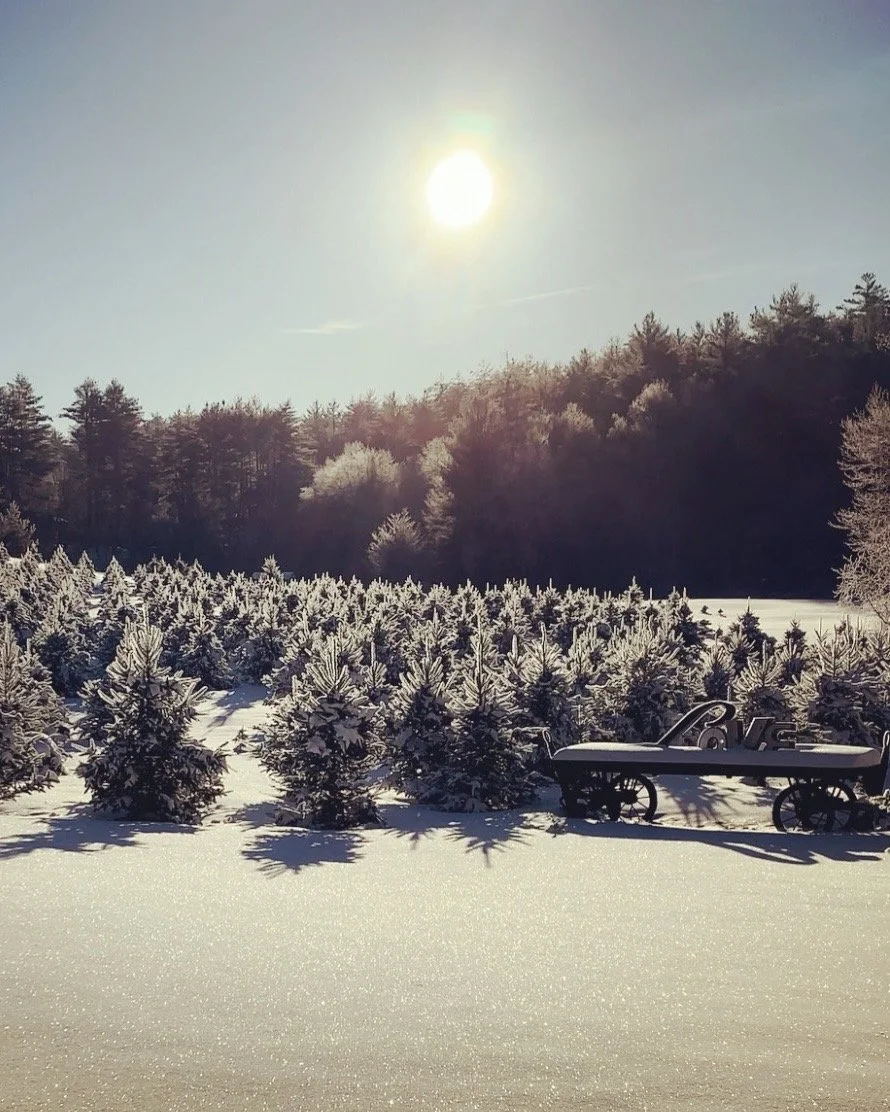
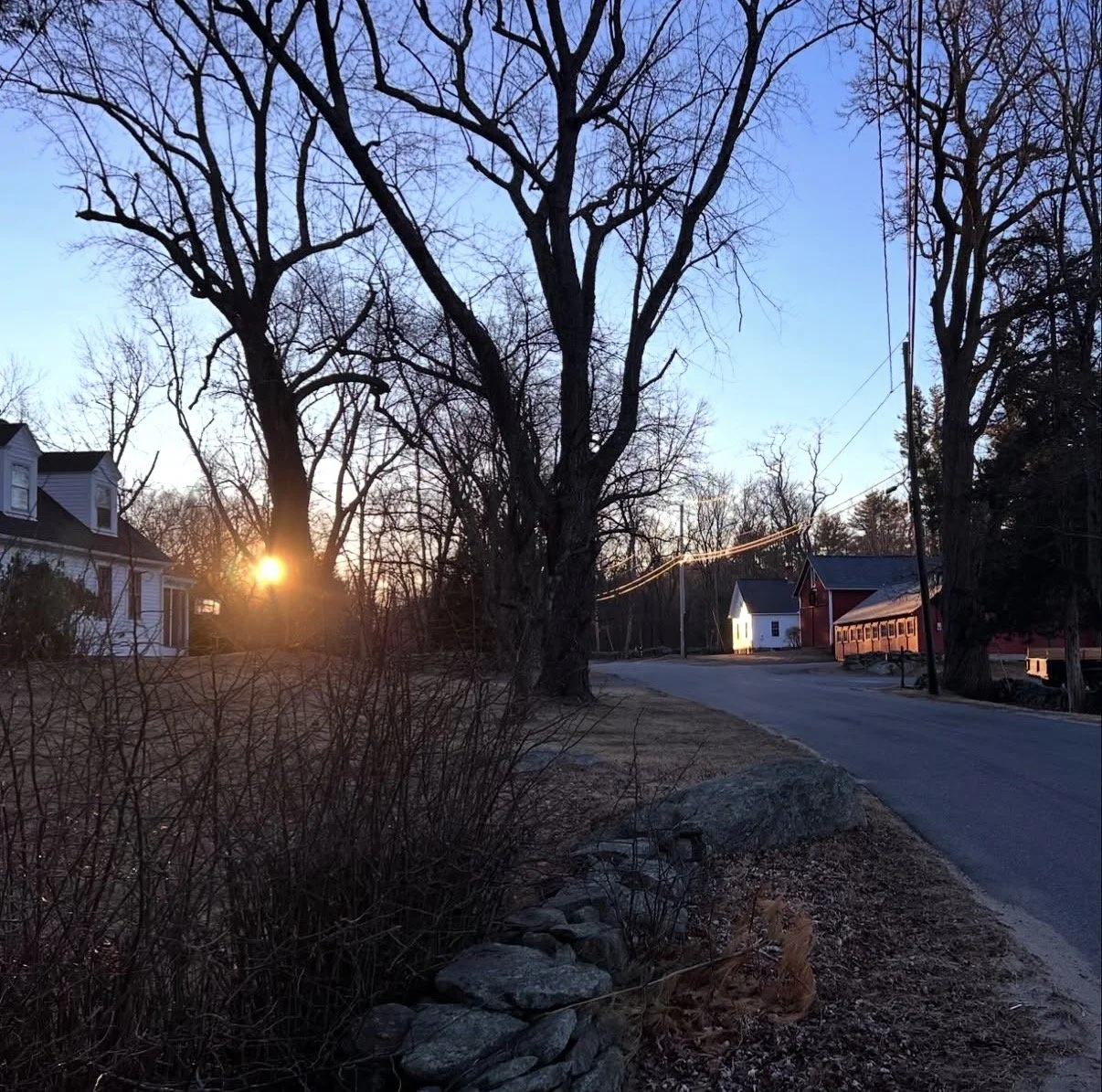
A sunlit moment of presence during a winter walk at Silver Bell Farm in Monson, Massachusetts

What element of my Modern Memoirs publishing internship do I like best so far? I’ve only been here for about a month, but here are a few things I can offer:

I enjoy learning about the different clients and their needs and desires. Each client is unique, and the company works to be flexible and adapt to each one. Some clients are doing their own writing, while others are interviewed and have their stories written in-house. Some want a shorter book, some want a longer book. Books vary in size, and some are softcover, while others are hardcover with leather and gold-foil stamps. There are an infinite number of design possibilities; in the same way, there are an infinite number of human stories.

I was asked to share my writing by contributing posts to the company blog. My blog post about “Beginnings” was shared last month, and I am writing another post about my grandmother and her journals. I appreciate this very much.


“Here’s a question for you, dear reader: do you know the difference between output and offering?”


And while this is not something specific to this internship, it has felt great to go into an office and contribute. The last time I worked in an office was at a software development company thirteen years ago. So, this new role isn’t a small thing for me! Most of my professional career has been working for my family. It’s important to be in my MFA program now and to take on work out in the world.

Here’s a question for you, dear reader: do you know the difference between output and offering? I didn’t until recently, when I was researching different types of writing for a class project. As I engage in my internship and contribute what I can, I see how “output” is work completed with the energy of fixing a problem. “Offering” is work completed in flow, with presence. The distinction has me reflecting on my work, my writing, and on the years (a lifetime, really) I’ve spent trying to fix myself.  I’ve prioritized output over offering, and it has left me feeling like something is missing.

Fixing oneself is different from taking care of oneself. In the latter, healthier vein, I’ve been taking Pilates classes for the past three years, and I have the absolute best instructor. She owns the studio and is a beautiful teacher in so many ways. This winter, with the bitter cold here in Massachusetts, a pipe froze, flooding her studio. She had to cancel classes for the week. Today, she told us how glad she was to be back teaching, how much she needed to be back, for herself. And as a drove away, I thought about how her teaching is her offering.

To be able to contribute, to offer something to the world, is life-giving. It’s your energy, it’s your creativity. It’s you. And maybe the person your offering gives the most life to is you.

* * *

This post is slightly adapted from a piece I wrote for my MFA in Creative Nonfiction program at Bay Path University.  To see the original post, as well as more of my writing, visit my Substack, “Pam’s Daybook.”
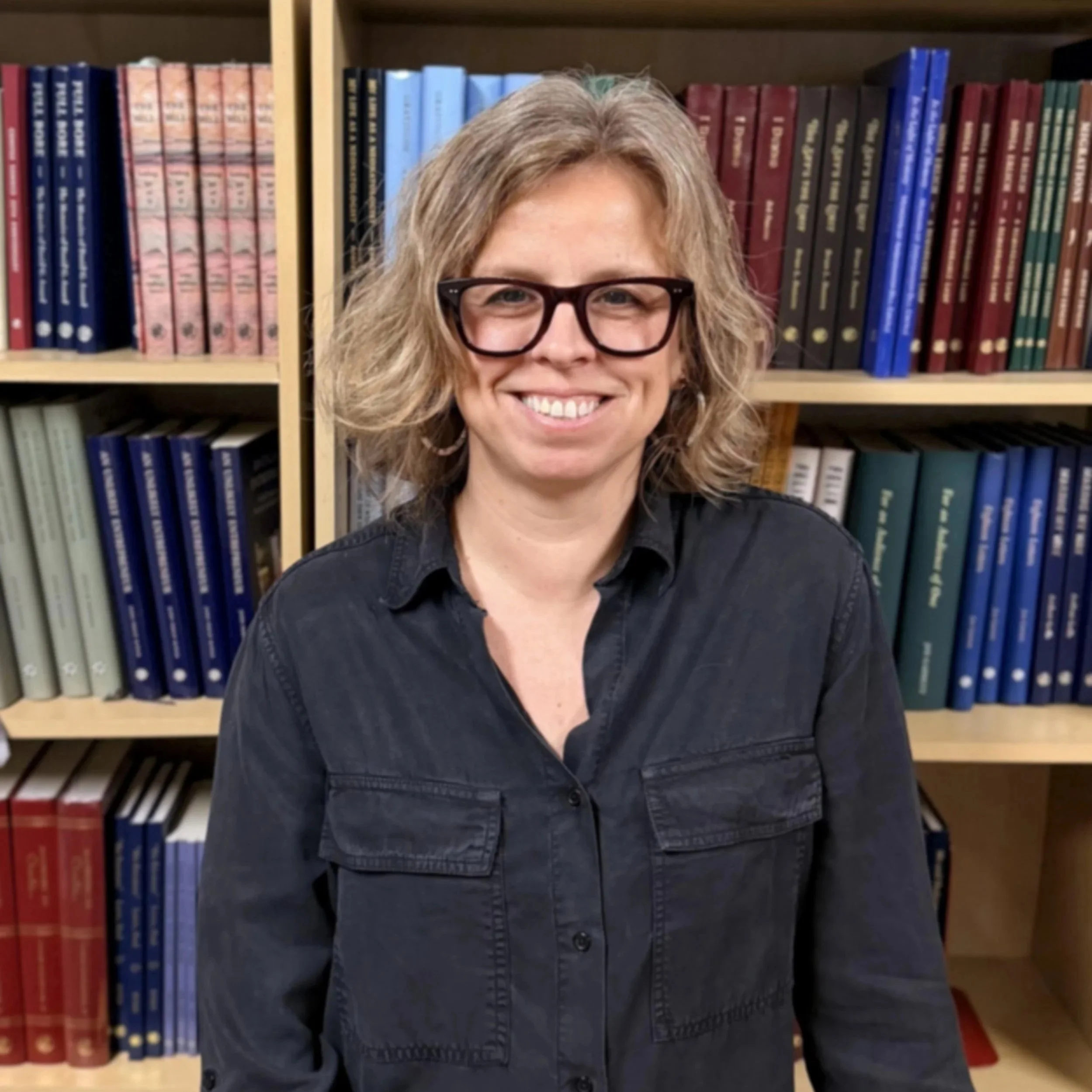


Pam Gainer is publishing intern at Modern Memoirs, Inc. in spring 2026
Love Is a Memoir

Hearts, Cupid, and chocolates are all around, and I’m thinking about one of the main reasons people write memoirs and family histories: love. It is an act of love to pour your energy into writing, to delve into your psyche or the past—painful or distant or beautiful or conflicted—and record your memories, knowledge, or family lore. An account of feelings, reflections, or recollections is a gift to your loved ones, a golden gift that only you can give. It’s a window into your soul. It also can provide roots for family members or promote belonging, connection, and understanding among people.

However, writing can take so long, be so tiring, become so tedious. It’s easy to lose interest or momentum. Yet the rewards abound. Memory may not last, but books do.

Looking on the shelves here in our Modern Memoirs library, I can quickly spot titles that quite literally embody love. These are commissioned joint memoirs of couples, and I remember working closely and compassionately with these partners during their book projects. A few examples:

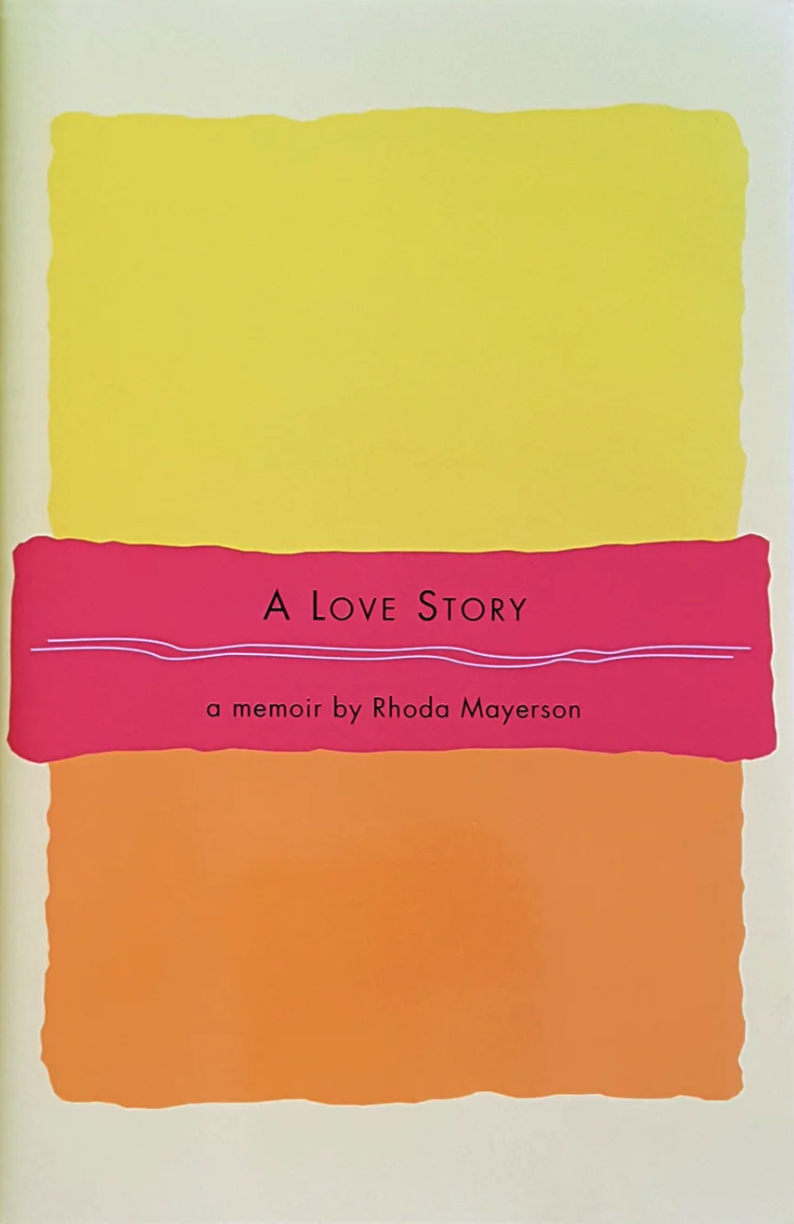
A Love Story: A Memoir—interviews with a family matriarch, augmented by stories and memories from her husband

The Hallam Family—interviews with an elder couple, including a WWII veteran’s war stories and photographs

Pam and Harry—interviews with a dynamic couple centered around family, family business, and community initiatives

Some memoirs include written contributions from family, colleagues, and/or friends:

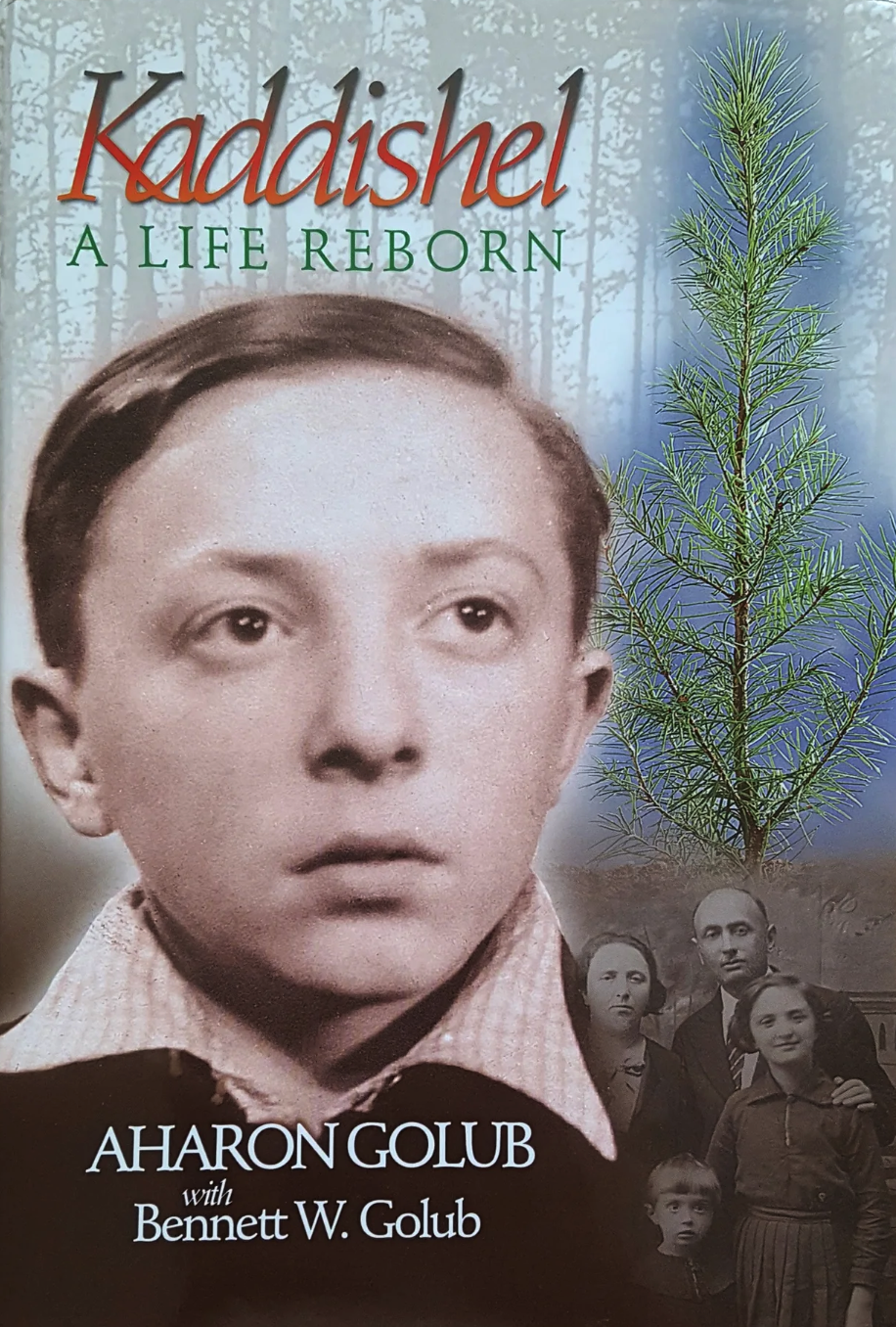
Kaddishel, A Life Reborn—one man’s Holocaust experience, with extensive interviews of his contemporaries on three continents, conducted in a variety of languages and translated for the book. (Click on book cover or on title to read this open-source digital volume.)

An Unlikely Entrepreneur—narrative by a businessman diagnosed with frontotemporal dementia, with additional chapters written by his wife

Conitex Sonoco 35th Anniversary: In Celebration of José Luis Artiga—company history and retirement gift to former founder/CEO, with written tributes from colleagues and family

And then there are the more varied styles of memoir, compilations of authentic journal or diary entries, letters, poems, even notes on index cards:

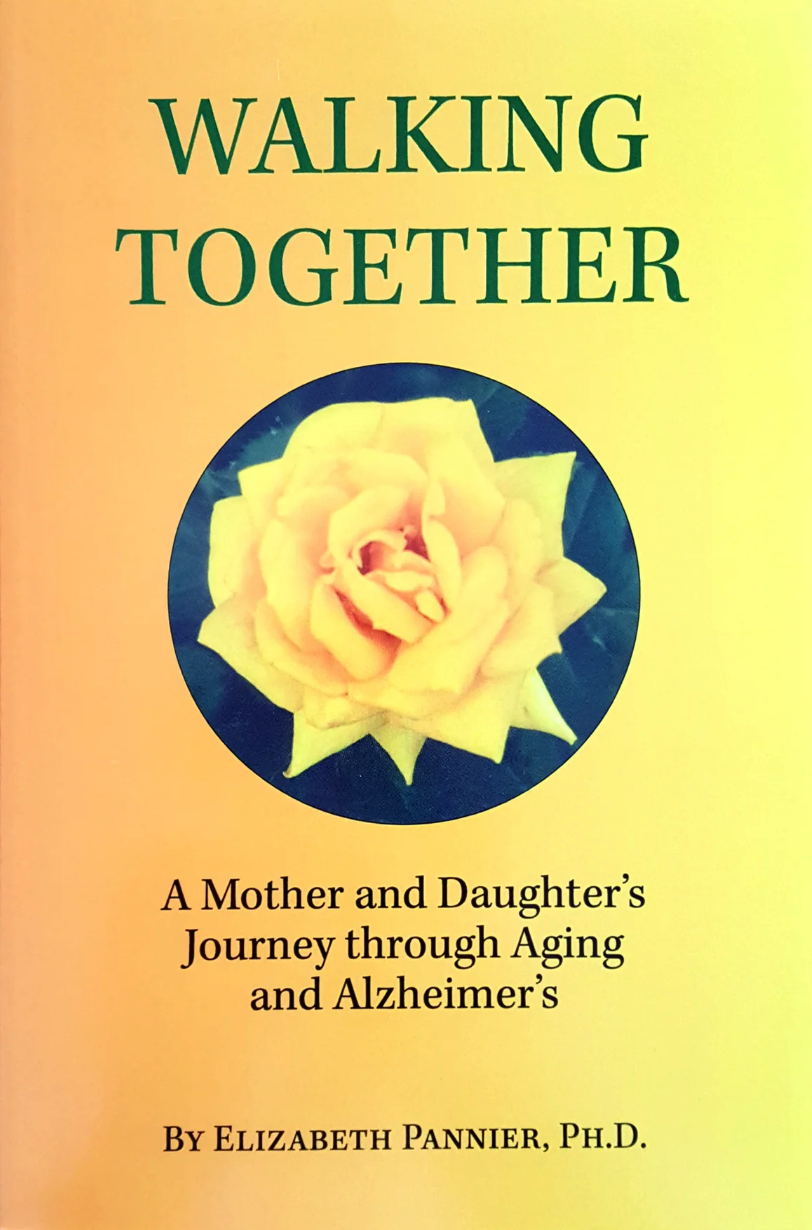
Walking Together: A Mother and Daughter’s Journey through Aging and Alzheimer’s—imagined letters from daughter to her mother during her final years

“No Excuses” Love, Dad—notes on index cards written by a father and stuffed into his son’s backpack every morning before school

A Grandmother’s Diary—journal writings about raising bilingual grandchildren

Eighteen Letters from a father to his daughter—a father’s letters written, but never sent, to his daughter, from birth until she went off to college when he shared this book with her

Reading Proust to My Mother—memories from childhood through sunset years with a literary mother

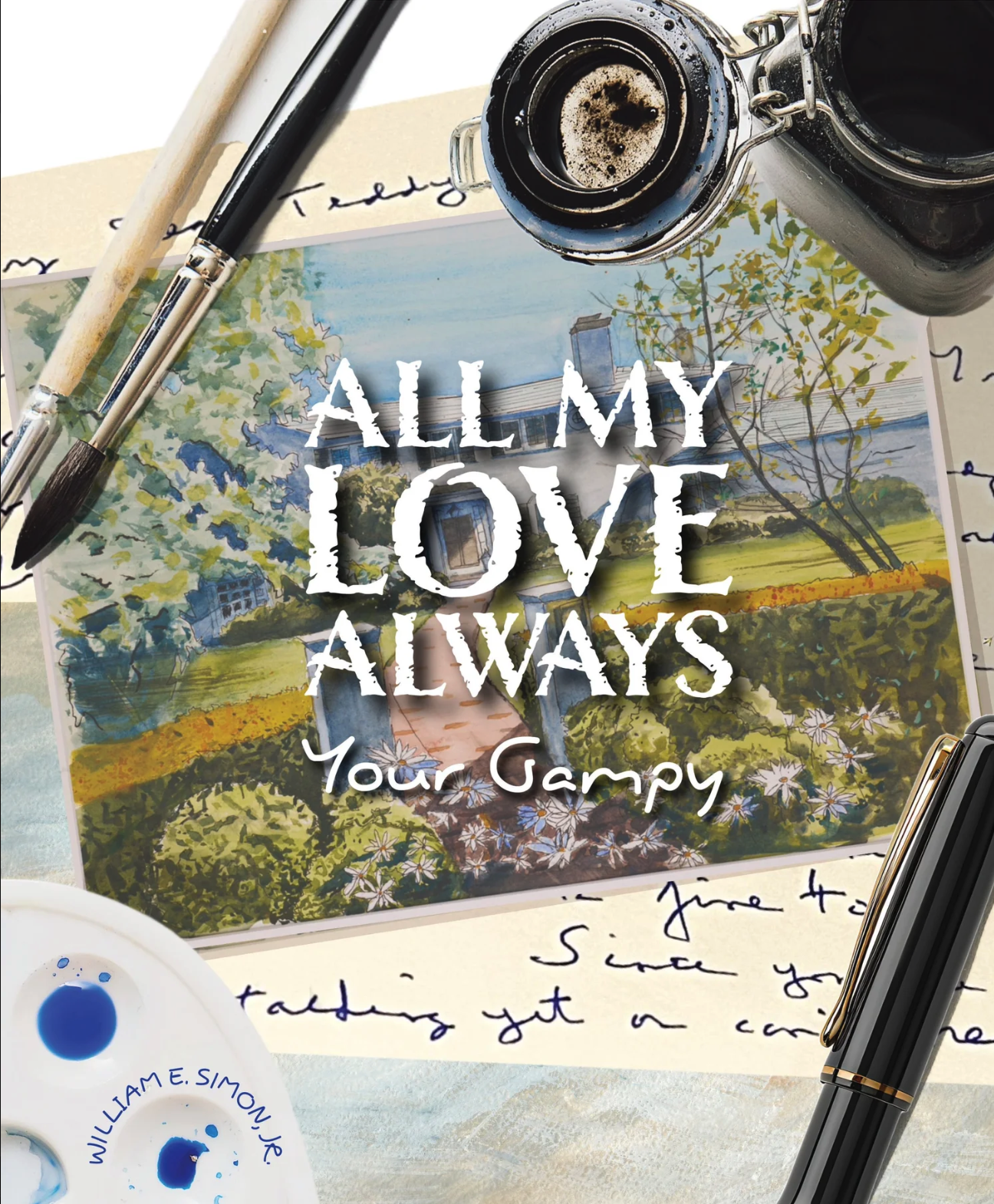
All My Love Always, Your Gampy—hundreds of letters from a grandfather to his grandchildren, though they are still too young to read a book!

In every one of these personal books, love shines through in the words of each narrator, in that unique way only seen in writing—with thoughtful attention to memory, detail, phrasing, relationship, and what Wordsworth called “the breathings of your heart.”

Perhaps you’ve thought about writing and not yet jumpstarted it. Perhaps your writing is just sitting on a desktop, idle. Try to get to the next step! Get the book done. Some day, somewhere, some family members or friends will be interested. And I’ll bet they will love it.

Beginnings

A blog post by Publishing Intern Pam Gainer

My internship at Modern Memoirs is a component of my Immersion in Publishing class at Bay Path University. One assignment is to write regular blog posts incorporating our internship experience. Fittingly enough, in our first post for class, we were asked to write about “beginnings.”  Referring to the staff bio I wrote as one of my first tasks at Modern Memoirs, I wrote about authenticity and beginning again, sharing:

“I’m inspired by my boys, as I watch them go out into the world, knowing themselves and following their own unique paths. I see myself doing the same thing, only it’s happening during the second half of life.”

Here is a link to the full blog post, which appears on my Substack, “Pam’s Daybook,” where you can find more of my writing, too.


Pam Gainer is publishing intern at Modern Memoirs, Inc. in spring 2026
No Longer Viral

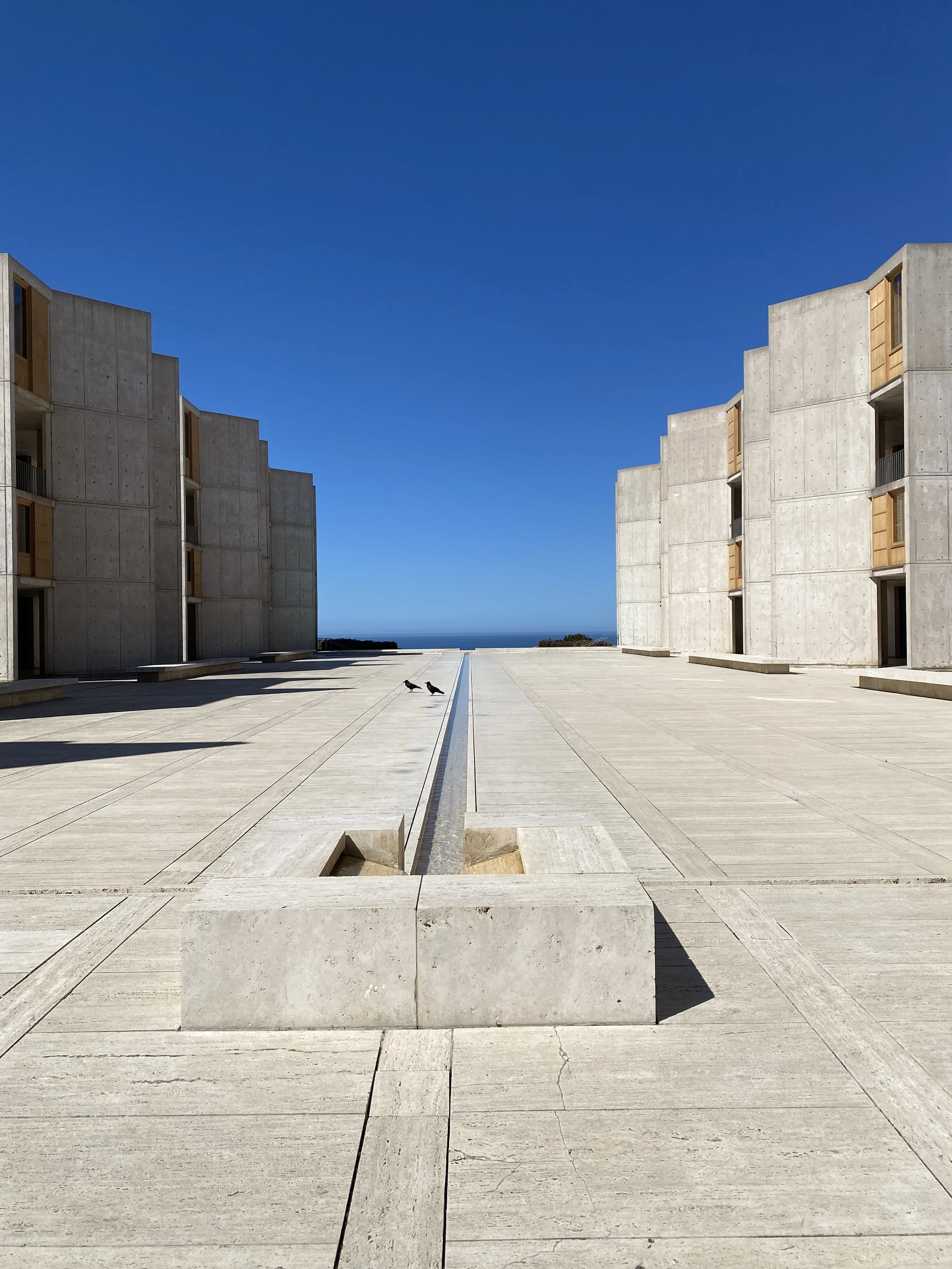
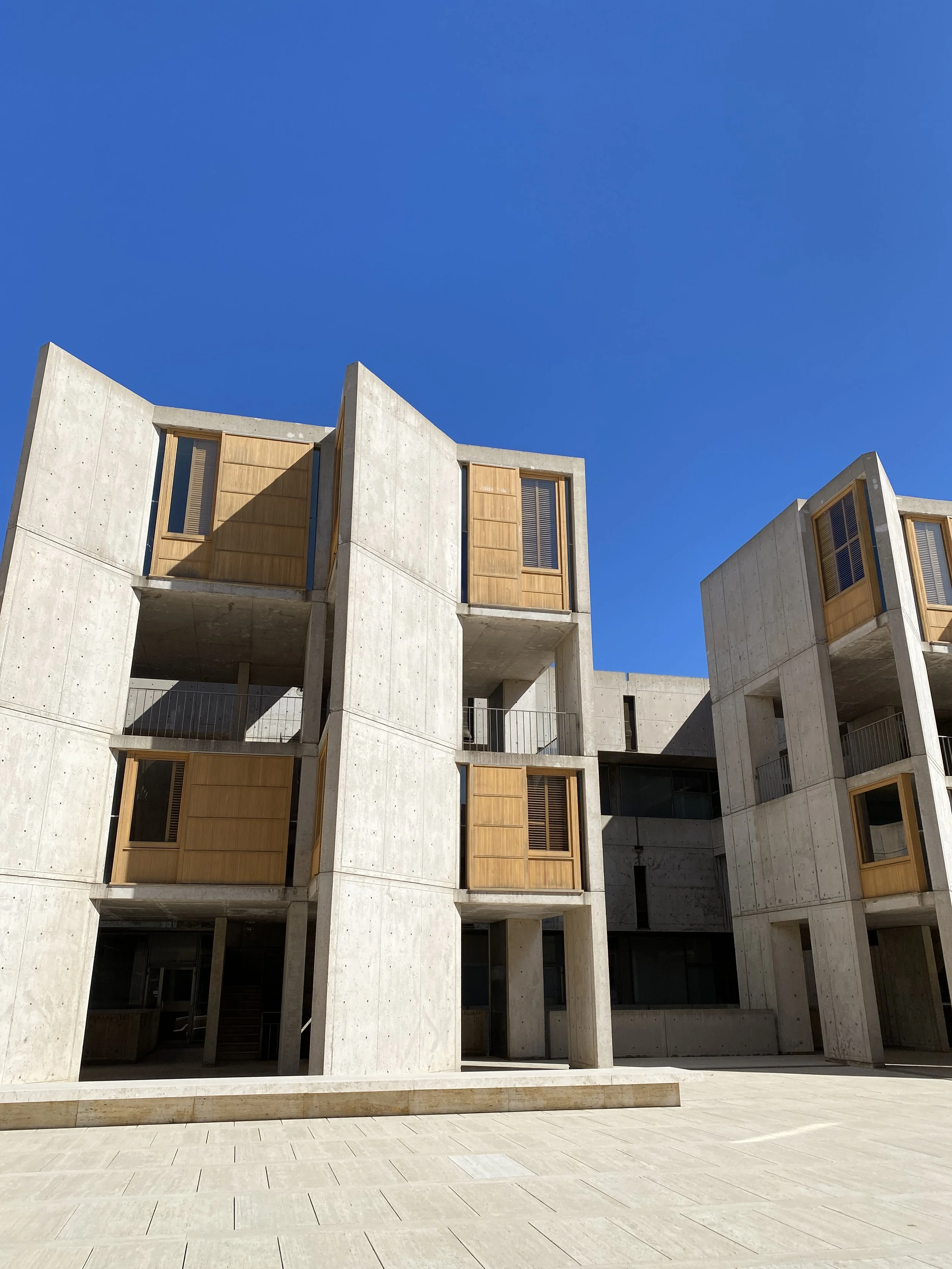
Salk Institute entrance

High on a cliff in La Jolla, California sits a marvelous building, the Salk Institute, and if you can ever get yourself there and take a tour, it is well worth it. From the website’s mission statement:

Unlocking the secrets of life itself is the driving force behind the Salk Institute. Our team of world-class, award-winning scientists pushes the boundaries of knowledge in areas such as neuroscience, cancer research, aging, immunobiology, plant biology, computational biology, and more. Founded by Jonas Salk, developer of the first safe and effective polio vaccine, the Institute is an independent, nonprofit research organization and architectural landmark: small by choice, intimate by nature, and fearless in the face of any challenge.

If the founder, mission, research and researchers weren’t astounding enough, the building, designed by renowned architect Louis I. Kahn, will astonish. I’ve visited a few different times and taken the tour, and each time walked away more fascinated than the time before. Given the chance to go back in time and redo my education and career, without a doubt I would become a scientist—that’s how inspired I feel.

If you aren’t or weren’t much aware of polio, it probably means that like me, you were born after 1955 and thus received the vaccine and may never have encountered anyone who’s actually had polio. You can look up for yourself the horrific, widespread effects of the disease. According to the World Health Organization (WHO), by the mid-20th century, polio could be found the world over, killing or debilitating over half a million people every year.

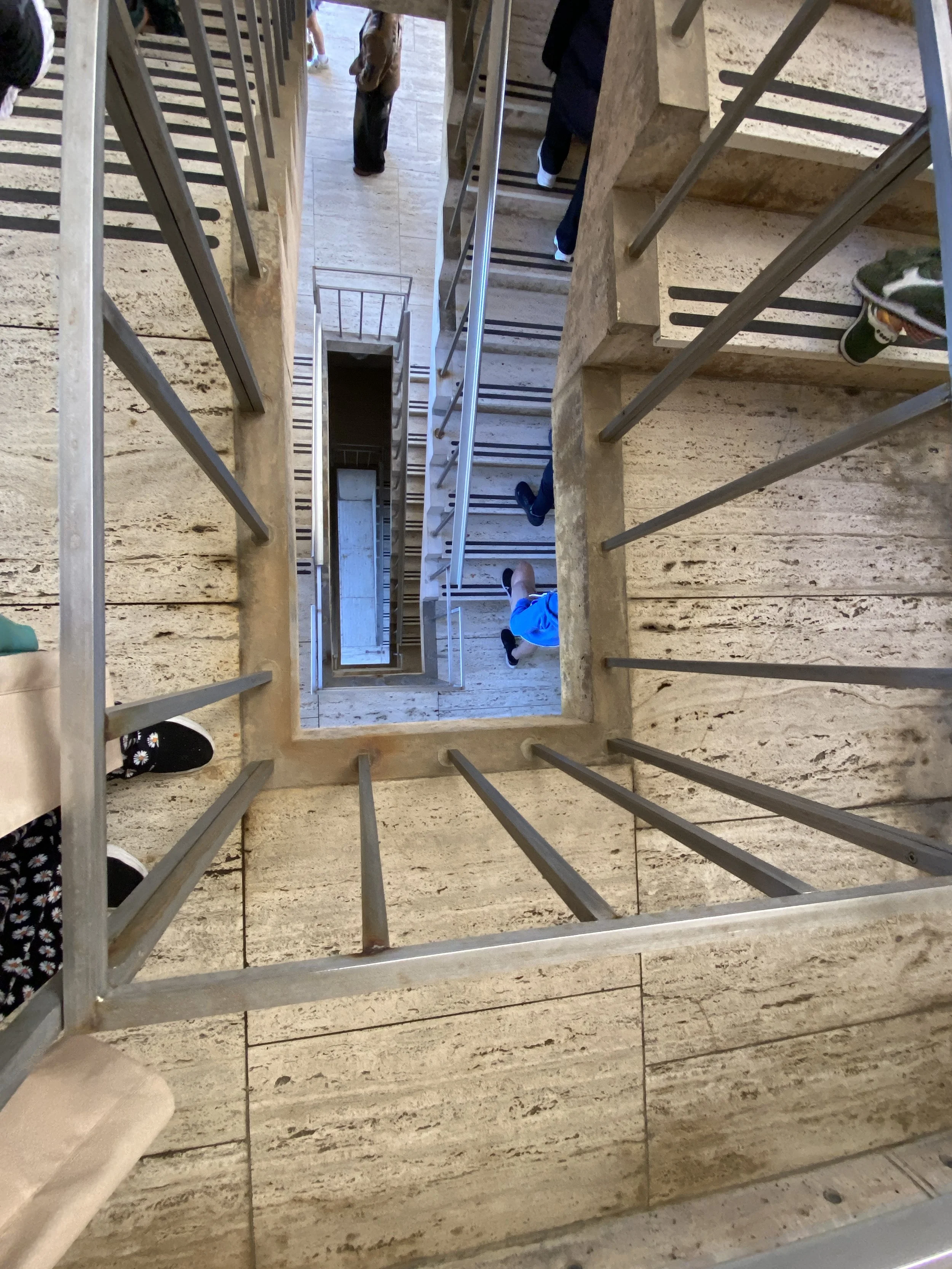
Scientists’ research offices

Remarkably, when Jonas Salk’s IPV vaccine was first introduced in 1955, polio cases saw a dramatic decline, falling from 58,000 to 5,600 by 1957, and finally to just 161 cases in 1961.

Salk recognized that fair access to the vaccine would help end the disease, and consequently he did not profit from sharing the formulation or production processes with the six licensed pharmaceutical companies. In a 1955 interview, Salk was asked who owned the patent for IPV. His reply: “There is no patent. Could you patent the sun?”

A true Helios, that Salk.

In 1960 he went on to enlist Louis Kahn in designing the Salk Institute, a residency for scientists embarking on their research. At the entrance of the complex is an infinity pool that extends out to a deep “Pool of Knowledge” surrounded by “Conversation Pits” where people are encouraged to share their ideas, dreams, and findings.

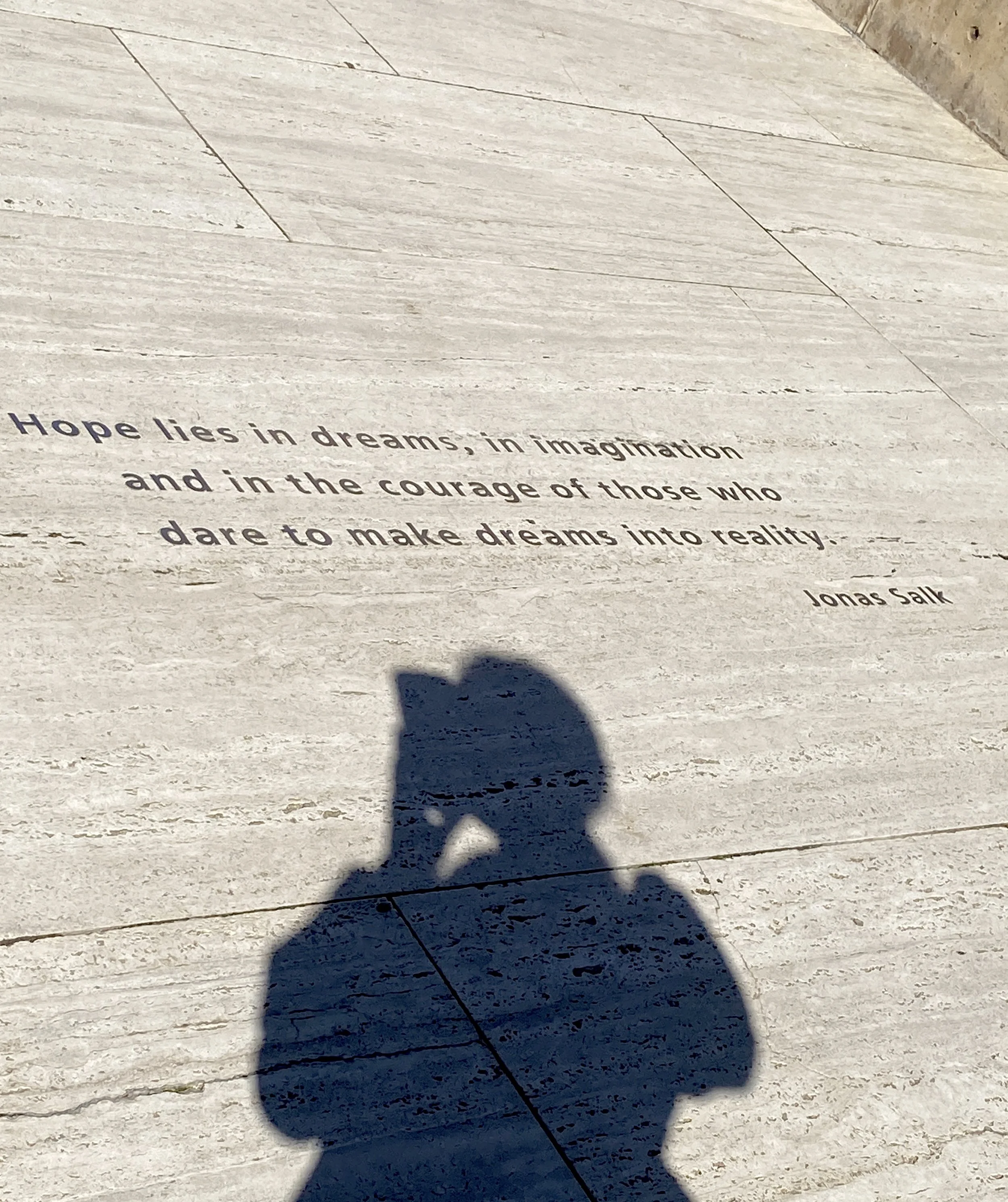
When stepping into this venerable space, one of the first things you see are Salk’s words carved into the Italian marble at your feet:

“Hope lies in dreams, in imagination, and in the courage of those who dare to make dreams into reality.”

In closing, I offer a few verses written while I was there in 2025:

For Jonas Edward Salk, M.D. (who would be age 111)

You were the brave soldier to plod onward
in the face of tragedy and illness,
hand in hand with a fierce reality,
pushing, pushing to find a piece of an answer
to overcome a relentless tsunami
of a dark disease.

In slaying a beast named Poliomyelitis,
you gave an answer and a hope
to the world ’round
for life itself,
for countless lives to live on and on
for beholden generations.

Built of your vision is the Salk Institute,
a Brutalist castle on a cliff
to welcome dreamers,
the scientists, seekers, and givers—
the humans devoted to that very human thing:
to analyze, to figure, to test and to cure.

This concrete wonder—
marble floor, teak beams, and
a travertine tableau paving the way for dreams—
pours an infinite line of liquid neurons
into pools of knowledge, of science,
and over a precipice into eternity, 
ever flowing forward, rivers of human trial and error,
turning mystery into the known,
while cradled in the universe of the unknown.

You give hope even as you aren’t here to say it.
You give honor to those science-soldiers who follow.
You embrace the world with your open arms
holding the globe in one small cell
or heaved upon your Atlas shoulders.

—Ali de Groot, 2025

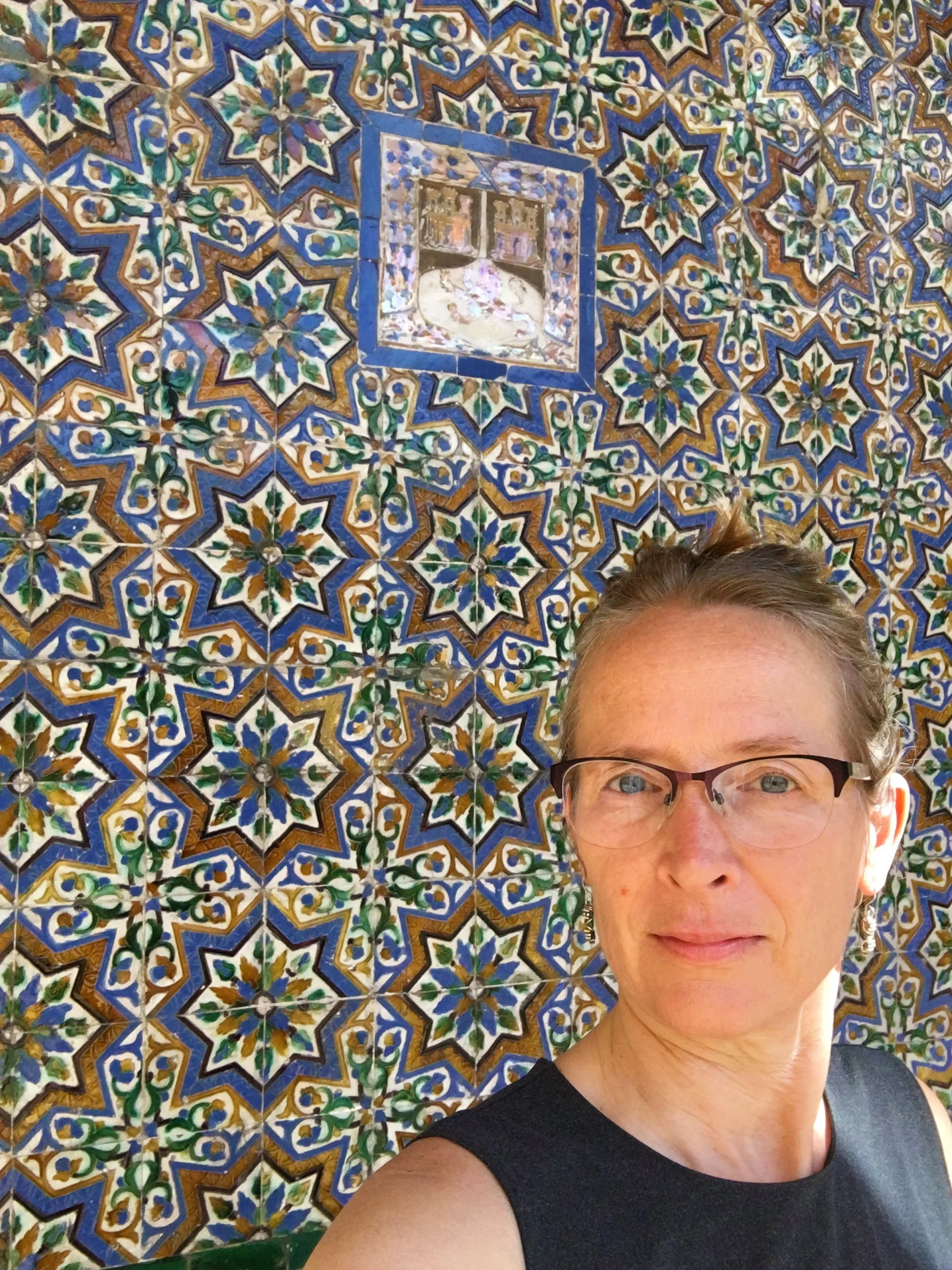
All photographs © 2026 Ali de Groot


Ali de Groot is director of publishing for Modern Memoirs, Inc.

A Toast to Family History

Today the phone rang at the office, and I answered it to hear an excited voice say, “Hello! It’s Virginia, and I was so pleased to receive your solstice card once again!” 

The solstice card is the Modern Memoirs greeting card that we send twice a year to former clients/authors. And I knew immediately who Virginia was—a former client from over a decade ago. 

“Virginia! It’s almost your birthday!” I said. 

“Yes! I can’t believe you always remember that! And I’ll be 96 this week,” she answered, to my surprise. 

I remember her birthday because she wrote about it vividly in her memoir/family history, Sicily to America: [My Father’s] Life Story, which we published in 2014. Although it has been a while since we worked together to create her book, I still have in mind many of the personal yet fascinating details, especially that her father’s birthday was the same as hers.

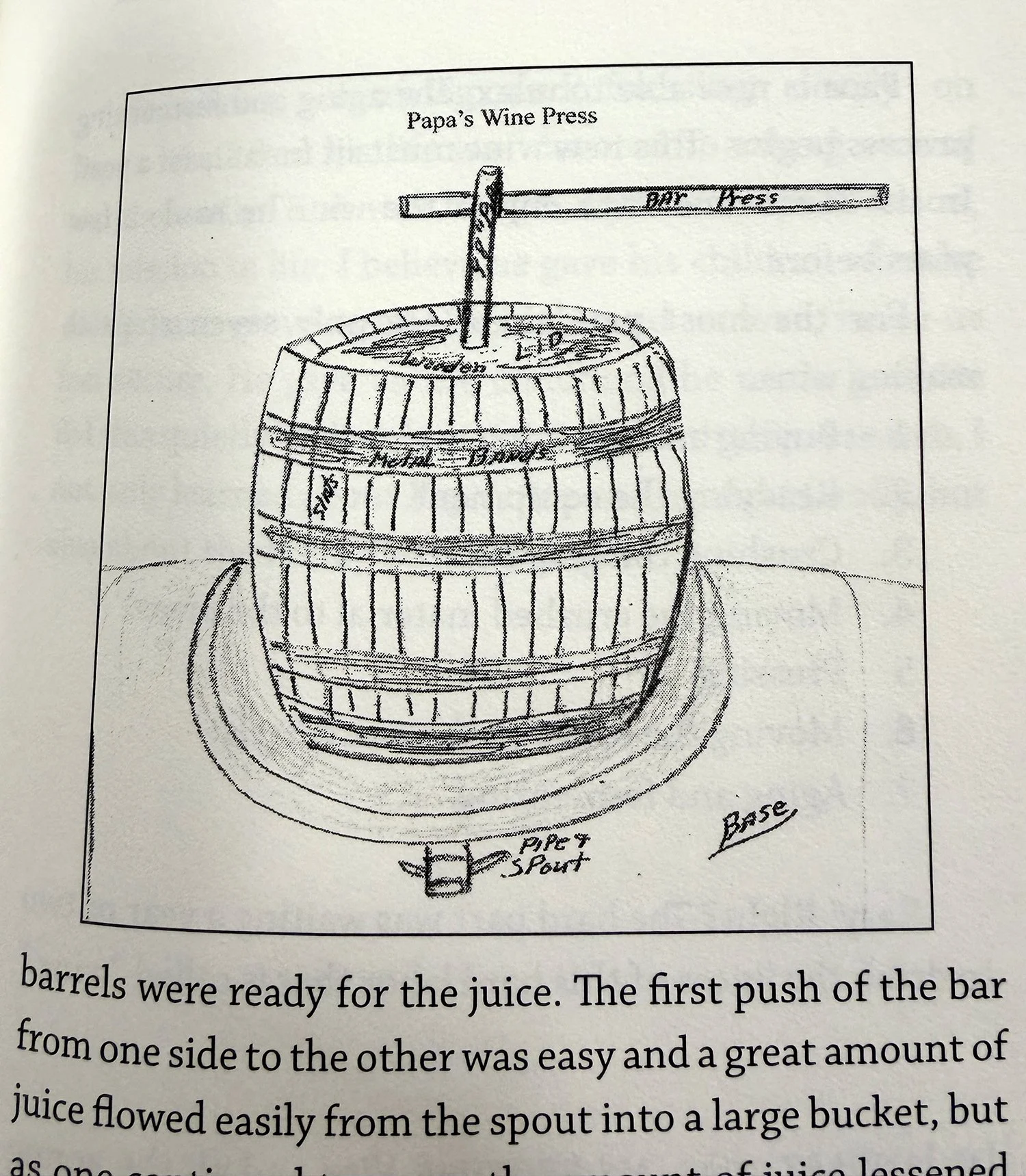
Sketch of Virgina’s father’s wine press

Her father had come to the U.S. from Sicily and started a life in the Boston area. Virginia remembers the homemade wine press he had in the cellar. Every September her papa would buy Concord grapes—60 boxes of grapes—to make two barrels of wine. (There is even a sketch of the wine press in the book.) Her family members and cousins would take turns first crushing the grapes in the wine crusher, then pouring it into the wine press, and then transferring the juice into barrels through a strainer. The barrels would sit for at least a year for the fermenting and aging process.

I also learned from Virginia that in later years, every year on her birthday, she would have a small glass of red wine and toast to her father’s memory. I thought it was such a simple, gorgeous way of honoring her father. And so I always remembered the birthday—just around winter solstice time.


“Why write a memoir or family history? Because it is bigger than you, and it is your loving gift to the past, present, and future, and it will come around again just when you think everyone has forgotten.” 


Now, as we spent a few minutes on the phone catching up, our aged, familiar connection resumed. I toasted aloud to her and her father with an invisible wine glass. And I had that nourishing feeling I get every time a client’s book is finished and they are utterly relieved it’s in their hands—their work of love, an immediate gratification after an arduous job well done. I’m elated, knowing the invaluable emotional returns will come to the author year after year after year.

Why write a memoir or family history? Because it is bigger than you, and it is your loving gift to the past, present, and future, and it will come around again just when you think everyone has forgotten. 

Happy 96th birthday, Virginia, and we raise a toast to you and your father. Remembrance is a blessing.


Ali de Groot is director of publishing for Modern Memoirs, Inc.

Reflections from Raymond A. Lambert

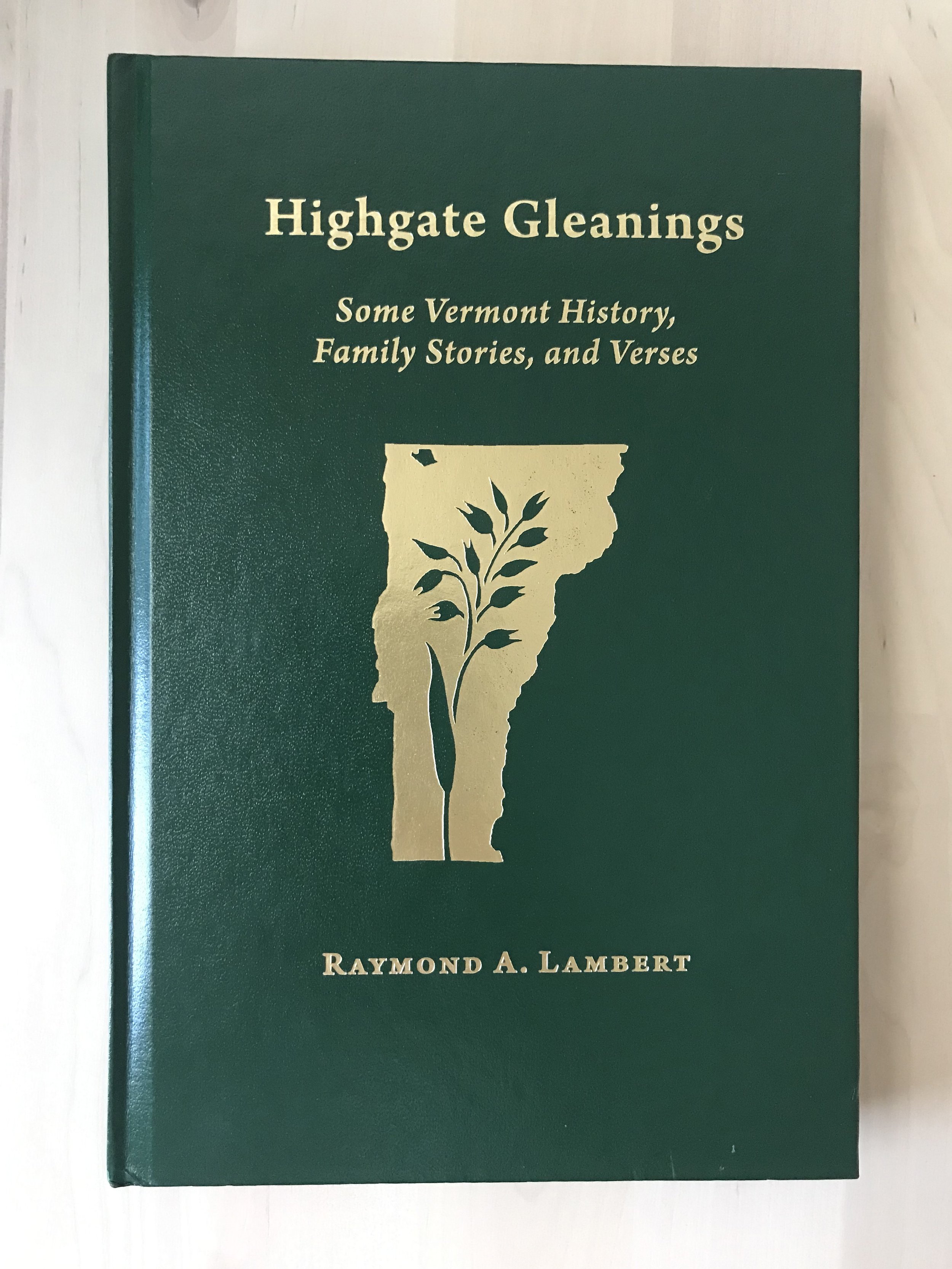
Raymond A. Lambert, father of company president Megan St. Marie, published his book, Highgate Gleanings: Some Vermont History, Family Stories, and Verses, with Modern Memoirs in 2020. This memoir and family history book took about eight months to complete and was one of the first projects Megan worked on after coming to Modern Memoirs. She’s often said that working on this book with her father was one of the most meaningful experiences of her life, as it not only gave her practical experience in her early days as company president, but also affirmed her belief in the value of life-review writing and intergenerational storytelling as means of self-discovery and deepening familial connections. We asked Ray to reflect on what the publication process was like for him as he worked with Megan and Director of Publishing Ali de Groot, who oversaw design and production phases, and what it has meant to share his book with others.


1. You came to the Modern Memoirs office with binders and file boxes filled with years’ worth of writings, photographs, documents, and genealogy information, saying “There’s a book in here!” How does the resulting structure of Highgate Gleanings incorporate those various materials and evoke its title’s meaning?

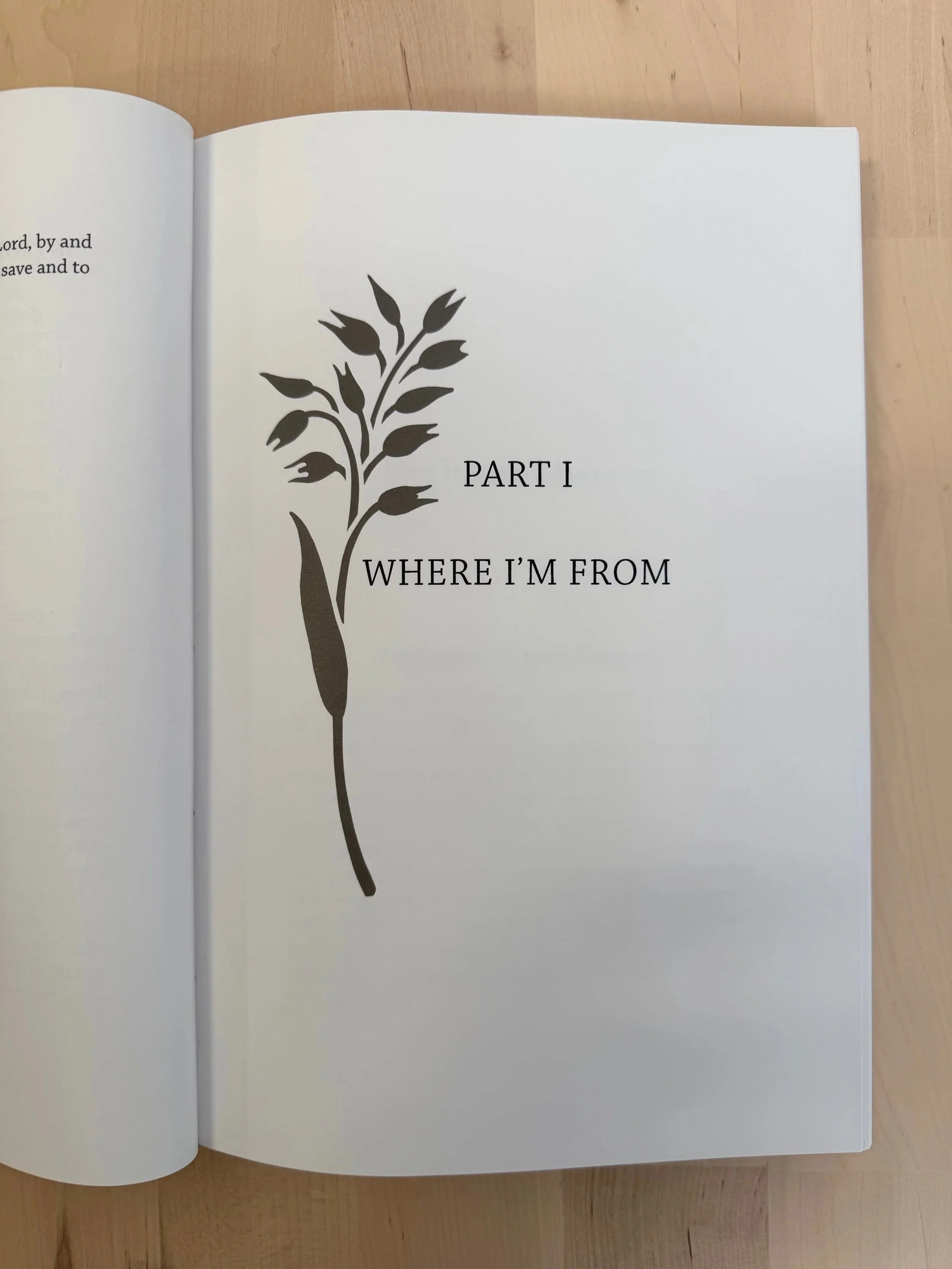
Raymond A. Lambert: The title, Highgate Gleanings, represented in the cover art and on part-start pages by a single oat stalk with oats ready to be gleaned, indicates that the gleanings contained in those four parts of the book come from many life experiences. The subtitle with its reference to various categories of these gleanings, Some Vermont History, Family Stories, and Verses affirms the wide range of material included in the book.

I did not attempt to write a chronological narrative of my life. That would have required much oversight with necessary corrections for the narrative to flow. Instead, Megan helped me in in the editorial process by creating a four-part structure around the themes of place (“Where I’m From”), heritage (“Who I’m From”), identity (“The Man I Am”), and spirituality (“Heart and Soul”).

2. What part of the publishing process surprised you, or gave you new insights into your life’s story or family history?

Raymond A. Lambert: I can’t say anything surprised me because I did not know what to expect! While I wrote the three required theses for my graduate degrees (M.A. in Religious Education at Catholic University, M.A. in School Guidance at St. Michael’s College; M.A. in School Administration at Castleton State College) and made a few copies of those papers to have on hand in case anyone might be interested in them, publishing a book was a totally new experience for me. It was easy to place my trust in Megan’s editorial work, and Ali de Groot was most helpful during the pre-publication process and oversight of the printing.

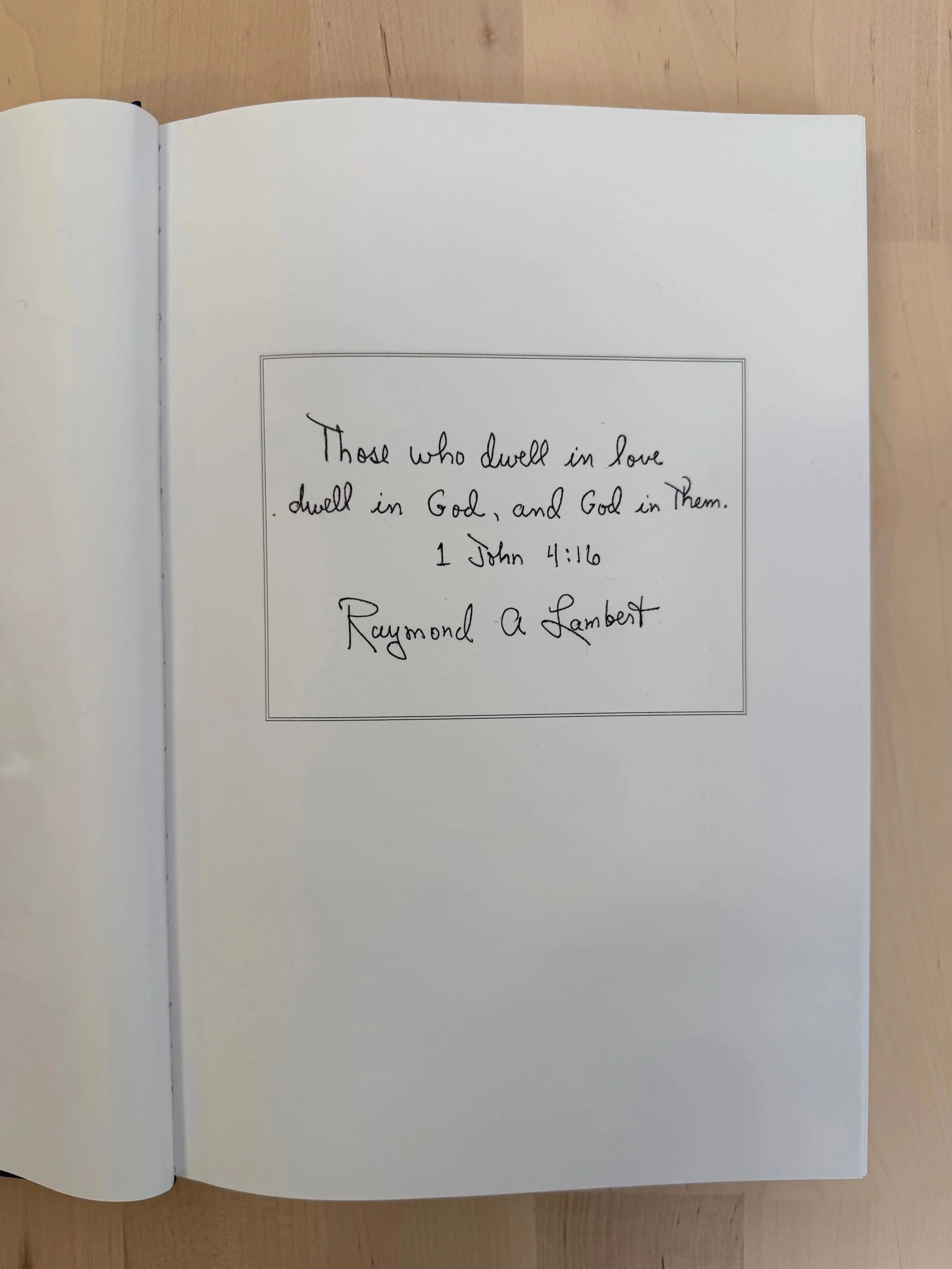
Two additions to my original materials perhaps deserve some comment here: Megan suggested that I include an epigraph at the front of the book in my own handwriting, as well as a “Legacy Letter” at the end of the book. It was easy for me to choose the epigraph, a favorite Bible verse that expresses a guiding principle of my faith: “Those who dwell in love dwell in God, and God in them,” (1 John 4:16). I hadn’t ever considered writing a Legacy Letter before, but with Megan’s encouragement, I wrote a draft that we then edited to capture the intangible gifts of love, values, hopes, and life lessons that I want to pass on to my loved ones.

Handwritten epigraph from Highgate Gleanings: Some Vermont History, Family Stories, and Verses

Illustrated part opening page from Highgate Gleanings: Some Vermont History, Family Stories, and Verses

3. You’ve researched your family history for decades, and your book includes some content from that work. What other parts of that research would you like to highlight here that didn’t make it to print?

Raymond A. Lambert: At last count, I’ve documented over 54,000 relatives on my family history website, with most of my ancestors traced back to France and French Canada. I share some family history in Highgate Gleanings, but it’s not a genealogy book with a comprehensive, sourced account of my lineage and ancestor and descendant charts. That would be a massive undertaking!

Discoveries of some rather interesting ancestors and relatives who immigrated to North America, particularly to Quebec and Acadia (now Nova Scotia), have prompted me to think about compiling a book with biographies of some of them. I feel particularly drawn to the stories of my Acadian relatives and ancestors who were impacted by Le Grand Dérangement, or the Great Expulsion, carried out by British colonial leaders in North America during the mid-eighteenth century. In his book A Great and Noble Scheme, historian John Mack Faragher refers to Le Grand Dérangement as the first instance of state-sponsored ethnic cleansing in North America. Out of a population of 18,000 Acadians alive at that time, I have found over 2,100 who are relatives and sixteen who are my direct ancestors. Included among those relatives and ancestors are some of the 10,000 Acadians who died as a result of this terrible moment in history, or about 56% of the population. Those who survived became a diasporic population, often acculturated and assimilated into the places where they ended up—the North American British colonies, England, France, Quebec—though one group of expelled Acadians decided to put down roots in present-day Louisiana, and we know their descendants today as the Cajuns.

A few years ago, Megan and I gave an online presentation based on my genealogy research, “Pain at the Root: Le Grand Dérangement and Our Family History,” hosted by the Franco American Centre at the University of Maine-Orono. My research continues with the expectation that there are many more Acadian relatives to be found. A trip to Nova Scotia a few years ago with visits to embarkation points was a very emotional experience. Who would have thought that genealogical research would do that? 


“I invited people to crowd-fund the printing cost, and I was thrilled when dozens upon dozens of people made contributions to pay for their own copies.”

4. How does the book’s cover and its interior design support its written content?


Raymond A. Lambert: The cover is really an invitation to explore within. The map superimposed on the green cover evokes Vermont as the Green Mountain State. The single oat stalk bearing its grains hints at the contents to be gleaned, un-shucked, or harvested by the reader. The small green space in the northwest corner bordering Quebec, Canada depicts the town of Highgate, where my twelve siblings and I were raised. The homestead in Highgate is now owned by a brother-in-law, who was married to my sister, Barbara. After Barbara’s death, he remarried, and he and his wife continue to host an annual family reunion at the homestead, bringing family members back for potluck, catching up, and what has been called a “no-talent show.” Truth be told, however, there are some very talented musicians, singers, and storytellers among us. 

The interior design of the book lends itself to reading the contents randomly. The table of contents works something like an index with parts, chapters, and many subheadings. Though the foreword might help the reader grasp the spirit and intent of the contents, it is not necessary to start from the beginning of the book. Reading any gleaning that might beckon is in order. Open the book to any page, and read on.

5. How have you shared your book with others? What are some of the best responses you’ve received?

Raymond A. Lambert: In the foreword to the book I wrote, “This collection of gleanings, stories and memories and some doggerel (bad poetry) is intended for my brothers and sisters, children, grandchildren, nieces and nephews, friends, and neighbors, and some folks in my hometown, Highgate, Vermont. Read as and if you wish.” Since I have such a large extended family, I invited people to crowd-fund the printing cost, and I was thrilled when dozens upon dozens of people made contributions to pay for their own copies, and in many cases, to cover the cost of copies for other people. It’s been very rewarding to see family and friends enjoying the book. Just recently, I learned that my youngest brother’s ten-year-old granddaughter often rereads it to learn more about her ancestors and relatives.

The Highgate Public Library invited me to give a talk about the book soon after it was published, and that was a treat. Others have commented about individuals mentioned in the book and some of the Highgate town history. I must say that the most endearing response I have received has been from my daughter Megan St. Marie, which she writes about in the Introduction to this piece. If any parent-and-child pair reading this blog has the inclination to work together on a project like this, don’t hesitate! The gifts of writing, reminiscing, and sharing will be ones you’ll always treasure, in addition to the book you create.


Megan St. Marie is president of Modern Memoirs, Inc.